
How to plan a wedding reception in Copenhagen
26 June 2026 · 5 min
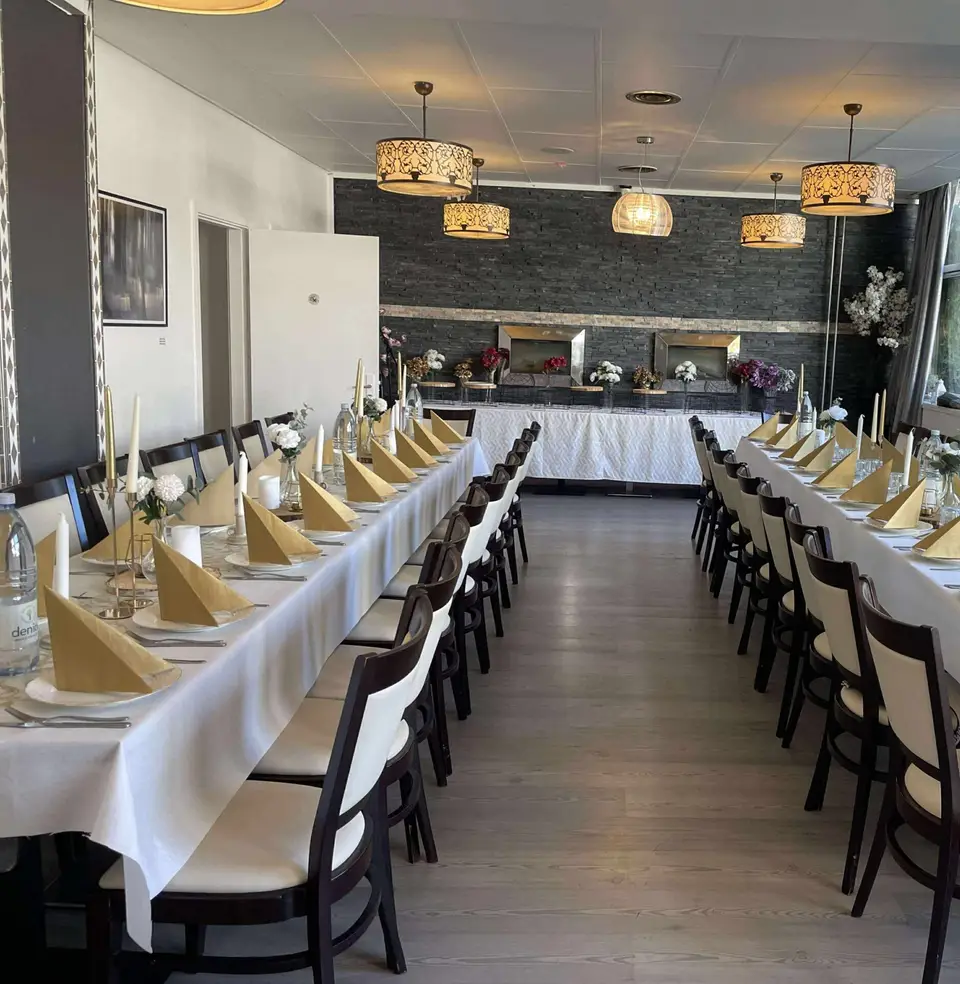
Most of the stress in planning a wedding reception comes from taking the decisions in the wrong order. A date gets fixed before anyone has counted the guests. A room is chosen before anyone has asked how the food reaches the table. Both then have to be undone, usually in the same week the invitations were supposed to go out.
Start with the guest list, because everything follows from it
Before the date, before the room, before anything else: write down the names. A reception for 45 people who all know each other is a completely different evening from one for 110 where half the room is meeting for the first time.
The list decides your budget, because almost every cost in a reception is charged per person. It decides which rooms are even possible. It decides whether everyone fits at long tables or you move to rounds. Our wedding page shows the layouts for a hall that seats 30 to 120 guests. And the list tells you how long the speeches will run, since the number of speeches follows the number of people who feel entitled to give one.
Write the list in three tiers: the people who must be there, the people you would like there, and the people you are inviting out of duty. When you have to cut, you already know where.
The hall you can get also decides which dates you can get, so agree the room first and take a date it still holds free. The full timetable for that, month by month, is in when to book a wedding venue in Copenhagen.
What do you tell the guests who are travelling in?
Give them the two distances that matter. Copenhagen Airport is 4.90 km from our door on Højdevej 59, and Copenhagen Central Station is 4.59 km, so the hall sits almost exactly halfway between the country's main airport and its main railway station. A cousin flying in from Oslo and an aunt arriving by train from Aarhus have the same short final leg.
That is worth passing on early, because the calendar is against you. Since 1995 the most popular month to marry in Denmark has been August, with June behind it, and those are the same weeks when everyone else is travelling too. Tell your out of town guests the date and the district as soon as you have both, so they find beds while there are beds to find.
Write the address in full on the invitation, Højdevej 59, 2300 København S, and name the district with it, Sundbyøster on Amager, so a guest typing it into a map app arrives on the right side of the harbour first time. Add that there is no charge to park on our own ground, which is worth saying out loud in this city.
Who cooks the food, and who serves it?
With us it is one team. Maiya Nepali Kitchen is in this building, along the corridor from the hall, and the people at the stove are the people who carry the plates out. What that buys you is a single conversation. The room and the meal get planned together, by the same people, at the same table, so you never describe your evening twice and then hope the two versions agree about when the main course lands.
Talk about dietary needs at the booking, not the week before. Vegetarian, allergies, children who will eat nothing green. All of it is easy to plan for and painful to improvise.
If your list mixes guests who love chilli with guests who quietly do not, a Nepali kitchen has an advantage here: the heat sits in the achar served alongside the dishes, so each guest sets their own level at the buffet. Ask about momo, the steamed dumplings, if you want something people can eat standing up while the room fills.
Any menu can be made fully vegetarian, and children aged 5 to 12 pay half the menu price. Both the hall fee and the menus are priced per person, so the guest list is doing double duty as your budget. The prices page shows the two together, so you can run the sum for 45 guests and again for 110.
Give the evening a shape
A reception without a shape drifts. Guests hesitate over whether to sit down, and the energy leaks out of the room around nine o'clock.
A spreadsheet is overkill. Five moments in order, with approximate times, is enough:
- when guests arrive and what they are handed
- when everyone sits
- when the food is served
- when the speeches happen
- when the music starts and the tables move
Send that to the venue team a couple of weeks ahead. When the people running the room know what is coming, they set the next thing up while the current one is still going, and the evening moves without anybody announcing that it is moving.
One practical note on speeches: ask each speaker for a length and then halve your expectations. Three speeches of five minutes is a warm interlude. Six speeches of twelve is an ordeal, and your main course waits in the kitchen throughout.
Plan for the hour nobody thinks about
The end. Someone has to gather the gifts, the flowers, the leftover cake, and the guest who has lost a jacket. If you have not decided who, it will be you, in your wedding clothes, at midnight.
Give that job to two people from outside the wedding party and tell them a week beforehand. Ask what time you have to be out, and whether cleaning is included, so nobody is stacking chairs at one in the morning. In our hall the cleaning belongs to the hall fee, along with decoration, sound and the projector, which keeps the practical side of the day from becoming a row of separate worries.
Bring the guest list to a viewing
Standing in the room with the names in your hand is the moment a seating plan stops being theory. It is also where the menu conversation starts, because you can point at the wall the buffet will stand against and get an answer from a kitchen thirty steps away.
Book a visit on any day of the week and bring the list, however unfinished it is. If you would rather begin with the food, ring +45 21 95 92 92 and we will talk menus first, then find you an afternoon to walk the room.