
What happens when you view a party venue
15 October 2026 · 5 min
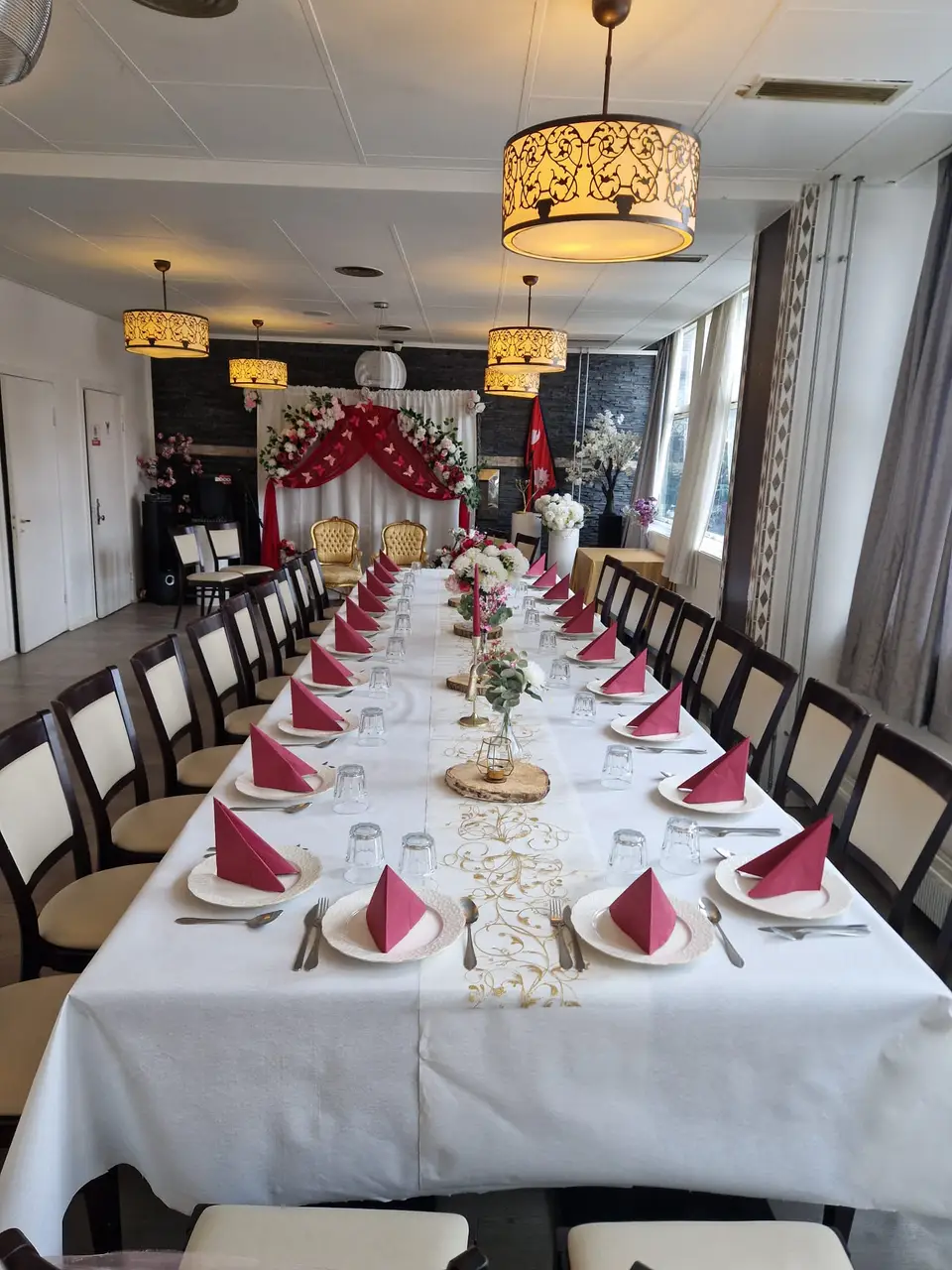
Twenty minutes in a room decides most party bookings. People arrive having already seen fifteen photographs, stand in the middle of the floor, agree that it is lovely, and drive home no better informed than when they came. The photographs were lovely to begin with. The point of standing there is to learn what a photograph structurally cannot tell you.
So it helps to know what a viewing is for before you book one. Here is what happens at ours on Højdevej 59, what we are doing while you look around, and the handful of checks worth making in any hall in Copenhagen, including the ones nobody thinks of until the week of the party.
What actually happens, from the door to the goodbye
You pick a time, you come to the building, somebody opens the hall and puts the lights on. There is no presentation, nothing to sign, and no obligation attached to turning up.
Most visits run twenty to forty minutes. The first few minutes are you telling us what the day is: a konfirmation in the spring, a fortieth in November, a wedding where the ceremony happens elsewhere and the dinner happens here. We ask the occasion, the date you are circling and a rough headcount, because those three answers change everything that follows. Forty-five guests and a hundred guests are laid out quite differently inside the same four walls.
Then you walk around. We point out the fixed things, where the sound comes from, where the projector throws, which wall the buffet stands against, and after that the most useful thing we can do is stop talking.
Most people leave with a provisional hold on a date and a written summary of what was said. Nobody is asked to decide standing up.
What to bring, and what to leave at home
Four things, none of them hard to produce.
- A guest number, even a rough one. It does not have to be right. It has to be close enough that we can tell you what the room looks like at your size rather than in general.
- The dates you are seriously considering. Bring two if you have two. Availability is the one answer that can end the conversation in a sentence, so get it early.
- The fixed times your day already carries. A church service at eleven, a ceremony at two, a photographer booked until five. These decide when the hall has to be ready far more than any preference you have about the evening.
- A photograph of the look you have in mind. One picture saves ten minutes of describing colours to each other.
Leave the full list of questions at home. Email ahead only the two or three that could end the conversation, and keep the rest for the room, where half of them answer themselves. The long version is written out in the questions worth asking before you rent a hall.
Walk the room in the order your guests will
The common mistake is to judge a hall from the middle of the floor. No guest ever experiences it from there.
Start at the door they will come through. Stand where the first arrivals will wait for the rest, and ask where the coats go, because an entrance that copes with eight people at once and jams at thirty is a genuine problem on a wet evening in January.
Then take the walk to a seat. In a hall this size that walk is short, which is the real argument for one room instead of a venue spread over several floors. The party never splits into the people who are where things are happening and the people who are not.
Then sit down. Properly sit, in a chair at the far end, and look back at the spot where the speeches will be made. If the speaker is hard to see from the worst seat in the room, that seat is going to be given to somebody you love.
Last, stand where the food will be served and look at the route back to the kitchen door. Ours is a few seconds away, because Maiya Nepali Kitchen is in this same building rather than at the other end of a postcode, and short routes are why hot food arrives hot.
The questions a room answers better than a brochure
Some things are simply not knowable from a listing.
Light. Ask to see the hall near the hour your party begins. Tall windows make an afternoon reception a different room from an evening dinner under the lamps, and only one of those two is in the photographs you have been looking at.
Sound. An empty hall never sounds like a full one. Clap once and listen to how long it rings, then ask what the room does with a hundred people and music in it.
Scale. Ours takes 30 to 120 guests, and the useful question is not the range but your own number inside it. Ask where the tables stop at your guest count, and whether that leaves floor for dancing or a cake table.
Arrival. Walk out to where the cars go. Our parking is free and sits beside the building, and in this city that is a claim better checked with your own eyes than believed from a web page. The hall itself is described on the hall page, but a page is a description and the room is the thing.
The hour after the viewing decides more than the viewing
Write it down before you get home. Two halls seen in one week merge into one memory with surprising speed, and the detail you lose is always the one that mattered.
Then ask for the numbers in writing: what the fee covers, when the final guest count is due, what time you can get in to decorate and what time the music has to stop. Our standing answers are collected in the questions we are asked most, and the shape of what things cost is set out on the prices page.
Then give it a night. A room you still like on Monday morning is the one to book.
Come and see this one. Book a visit to Højdevej 59, 2300 København S, tell us the occasion, the date you are circling and roughly how many people, and the lights will be on when you arrive. The phone is +45 21 95 92 92 if that is quicker.