
When is the autumn confirmation in Denmark?
6 October 2026 · 5 min
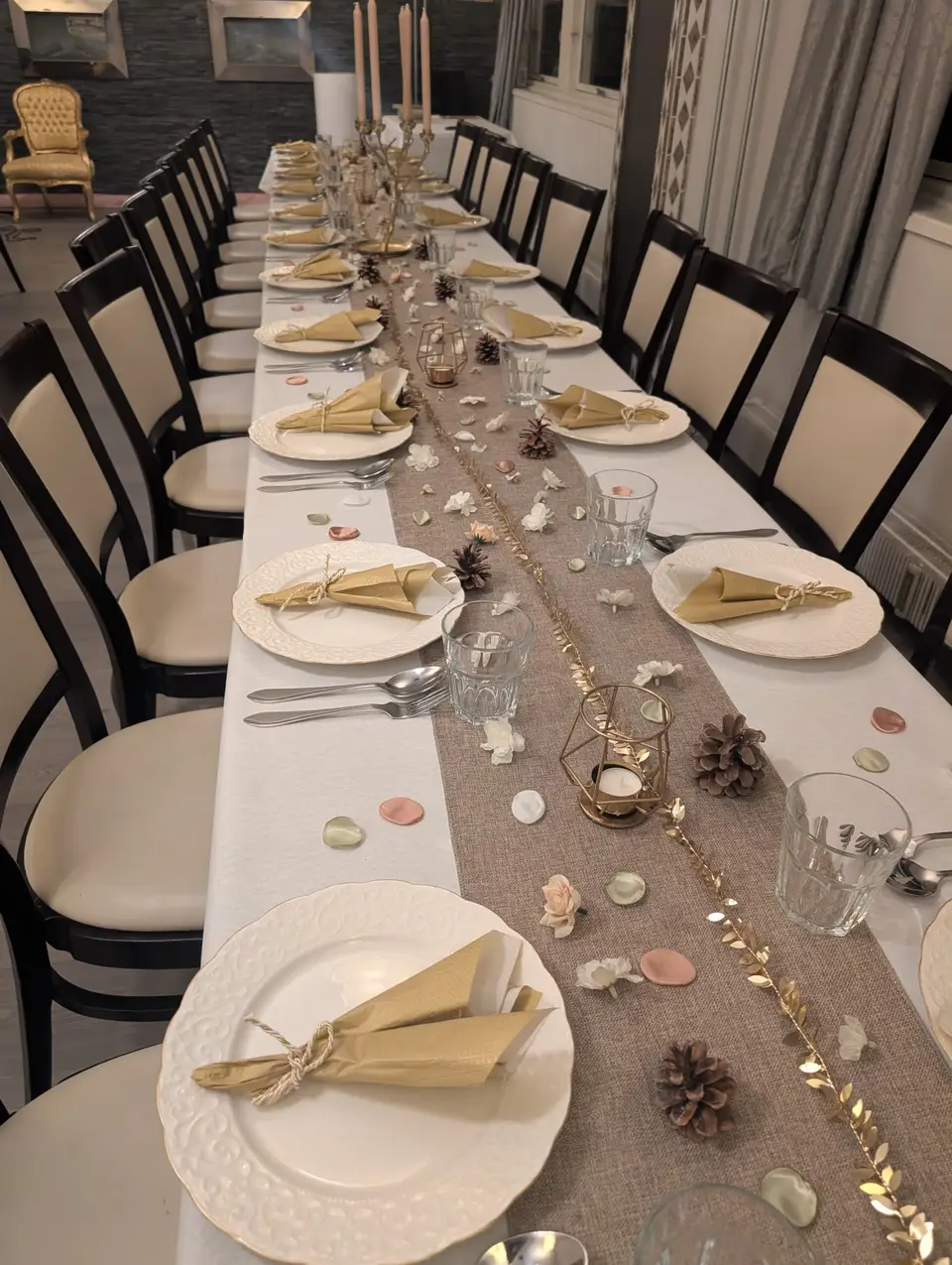
A Danish parish year has two confirmation seasons, and only one of them gets talked about. The spring is the crowded one. The second runs in September, it is much smaller, and for a family trying to make a church, a photographer, a hall and forty relatives agree on a single Saturday, it is a far gentler thing to arrange.
The short answer to when it falls: September, and usually the back half of it. The longer answer is that your own parish decides, and no calendar printed anywhere else can hand you your date.
September, with your parish on top of it
Autumn confirmations are held in the middle and late part of September. That window is steady enough to plan around while you start making calls.
What it is not is your date. Every church sets and publishes its own confirmation days, which is why two families living on the same street can end up a fortnight apart. Ring the kirkekontor, ask for the autumn days in the year your confirmand is due, and ask for them in writing. The invitations, the photographer, the room and the meal all hang off that one line in an email.
If you are still weighing the autumn against the spring, when is confirmation in Denmark in 2027 sets out how a spring season is shaped. That is the comparison most families are really making.
Who ends up celebrating in September
An autumn date is rarely a consolation prize. Families reach it for reasons that stand up on their own.
- A confirmand who started preparation later, after a move or a change of school.
- A family whose relatives travel, and for whom a September weekend is simply easier to gather everyone into.
- A confirmand who would rather not be the fifth invitation that month in one class, and would like a day that belongs to them.
- A family who looked at the spring, liked none of what was left, and decided that a date they could actually choose was worth more than a date everybody wanted.
Ask the confirmand before you decide. Celebrating apart from most of the class is the social question underneath all of this, and a fourteen year old usually has a quick, clear answer to it. Theirs is the one that should count here.
What the quieter half of the calendar is worth
The spring packs a whole year group into a handful of weekends, and every one of those families needs a room on the same afternoon. September does not behave that way. You are generally choosing between free Saturdays rather than waiting for one to fall through.
That changes the whole temperature of the planning. A photographer can usually still be had. You can look at a hall this month rather than the month after next, walk the length of it, ask what the afternoon will actually look like, and go home and think about it without someone else's deposit landing in the meantime.
The guest list behaves better too. In the spring a cousin in another parish is often confirmed on your Saturday, and you lose a whole branch of the family to a clash nobody could help. September rarely does that.
What September does to the day itself
A confirmation runs to a tight shape. The service is in the morning, everyone comes back for lunch in the early afternoon, and the party is generally done by evening. September fits that shape well.
The afternoon light holds. Photographs outdoors are not crushed into the few minutes between the church door and the car, and a lunch beginning at one o'clock is lit through the windows rather than from the ceiling.
There is a local detail worth knowing here. Sundby Kirkegård begins a couple of minutes on foot from the hall, on Kastrupvej. It was laid out in 1872 and lies in two halves either side of the road, and its oldest western part no longer takes new plots: that half is now a public green space called Eftertænksomhedens Oase, a place of remembrance that is also a quiet park. From April through September it stays open until 22:00, and from October it closes at 19:00. For a September confirmation that is a real advantage, because a family who wants photographs under mature trees after the meal has started still has somewhere green to walk to in the evening.
Coats are the other difference. In September the cloakroom is a courtesy rather than a logistical event, and nobody arriving from church has to unwind from boots and a heavy jacket in your doorway.
An autumn confirmation at Højdevej 59
There is one hall here, at Højdevej 59 in 2300 København S, on Amager. It seats 30 to 120 guests, which covers a confirmation of thirty five for the closest family as comfortably as one of ninety when both sides come and the class is invited. With a single hall, the afternoon belongs to one family at a time, so nothing is queued up behind the end of your lunch.
The kitchen is Maiya Nepali Kitchen and it sits in the same building, so a warm dish crosses a few metres instead of a few postcodes. Every menu is priced per head. Any menu can be made fully vegetarian, which quietly settles most of what a family list throws up at a kitchen. Children aged 5 to 12 pay half the menu price. Nearly every confirmation table has a few of them. Decoration, sound system, projector, staff and cleaning sit inside the hall fee rather than beside it. Thirty guests is the minimum the hall is booked for: a shorter list is genuinely welcome, though the hall fee is billed at thirty, while food and drink follow whoever sits down. Parking on site is free, which is worth more than it sounds when a dozen cars arrive from church inside the same half hour. Our confirmation page walks through an afternoon of this shape, and the prices page itemises everything the hall fee already carries.
Bring the September date and stand in the room
Get the autumn days from the parish first, in writing, then look at a room with that Saturday in your hand. The conversation is short once the date is real.
Call +45 21 95 92 92 if it is easier to talk it through, send the parish dates to info@maiya.dk, or book a visit and see the hall in September daylight.