
How many guests should you invite to a 40th birthday?
17 September 2026 · 5 min
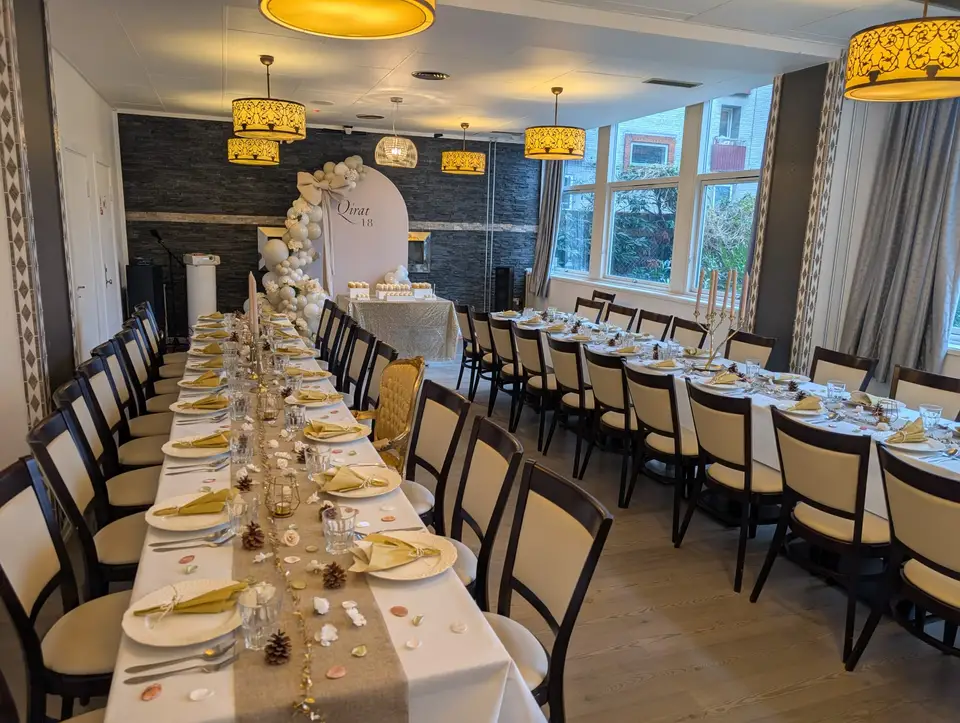
A fortieth is the first birthday where nobody else writes the guest list for you. A christening has godparents. A confirmation has a class, a church and a set of cousins. A fortieth has whoever you have collected in forty years, which is a far longer list and a much vaguer one.
So the useful question is not how many people you could invite. It is where the list stops, and what changes each time you extend it.
Write three lists, not one number
Guessing at a total first is what makes this hard. You pick ninety because it sounds like a proper party, then spend three weeks trying to find ninety people you actually want in a room.
Do it the other way around. Write three lists, in order of certainty, and read the totals off the end of them.
- List one: the people whose absence you would feel all evening.
- List two: list one, plus everyone who would be quietly surprised not to be asked.
- List three: everyone you would genuinely be glad to see, colleagues included.
Write all three before you decide anything. The three numbers that fall out are usually further apart than people expect, and the gap between them is the real decision.
List one: the twenty or so you would notice missing
Partner, children, parents, siblings and their partners. The two or three friends who have been there since before the job and the mortgage. Perhaps the couple you have been on holiday with every other summer.
For most people this lands somewhere around twenty to thirty names, and it makes a lovely evening: one table, one conversation, nobody stuck at the far end shouting.
One practical note if list one stops just short of thirty. Our hall has a booking floor at thirty guests. A party of twenty four is just as welcome and gets the same room, though the room charge assumes thirty while plates and glasses are still counted one at a time. Twenty four and thirty therefore land close together. If six names have been hovering on your maybe list since spring, this is the moment to add them.
List two: the wider circle, and the arithmetic of plus-ones
List two is where cousins, neighbours, the running group, the parents you see every week at the handball hall and the colleagues you would call friends all arrive.
It also carries an arithmetic trap. Names on list one mostly come to you already paired, and you counted both halves without thinking. Names on list two tend to arrive as one name that means two people. Write the list, then go back and add the partners, and watch what happens to the total.
Count the children on their own line while you are at it. Between 5 and 12 they eat at half the menu rate, so a dozen nine year olds do not weigh what a dozen adults weigh, and they are certainly not a dozen empty chairs. A list two of fifty to seventy is completely normal once the partners are on it.
List three: everyone, and what colleagues really add
Then there is work, and work is the step that changes the party rather than the number.
Colleagues rarely arrive as two or three names. They arrive as a department, because leaving out the four people who sit nearest you is harder than inviting all twelve. Add partners and a team of twelve becomes twenty guests, which is a table of its own.
That table is the point. A second group who all know each other and barely know anyone else does not spread evenly through the room. It forms its own centre of gravity, it changes what gets said in the speeches, and it changes how the evening sounds. None of that is a reason to leave work off the list. It is a reason to decide it deliberately, rather than discovering in May that the party grew a second half.
If list three takes you past ninety, you have moved from a dinner into something closer to a reception with dinner in it, and the layout has to follow. Standing space, a clear route to the buffet and somewhere the speeches can be heard from both ends matter more than they do at forty guests. That shift is worth reading about on the page for a party of around a hundred guests before you commit.
What each list does to this room
Our hall on Højdevej seats 30 to 120, and it is one room, so the guest count does not change the venue. It changes the layout inside it.
Around thirty, the room takes a single long run of tables with space to spare, which is the version people mean when they say intimate. Around sixty, it becomes two runs facing each other, and the middle of the room turns into the aisle where everything actually happens. Beyond ninety, we plan the evening around the buffet route and the speaking position first, and the tables after.
Two things make the longer lists easier than they look. The kitchen is here in the building, so a buffet for ninety is cooked and carried out by the same team a few steps from the tables. And parking on site is free, which quietly decides more of a guest list than people expect once it reaches the relatives who drive in from outside the city. Guests arriving without a car are well served too: the 8A stops at Sundby Kirkegård about two minutes from the door, and the M2 metro runs around the clock, so nobody has to leave during the speeches to catch the last train.
Pick a list, then come and stand in the room
Numbers on paper are hard to feel. Thirty and sixty sound like different parties, and a room at sixty looks very different from the same room at thirty.
So write your three lists first, bring the middle one, and book a visit to see what that many chairs actually looks like on the floor. We will tell you honestly which of your three lists the room wears best. The birthday page covers how we run a milestone evening, and every current figure for hall, menu and drinks lives on the prices and inclusions page.