
How to plan a surprise party that survives the last half hour
28 September 2026 · 5 min
Ask anyone whose surprise party was spoiled and they will rarely blame the guest list. Forty people held it for two months. Then something small went wrong in the final twenty minutes, usually outdoors, usually in plain view of the one person who was not supposed to see it.
That is worth knowing before you start, because it tells you where the planning effort belongs. Keeping the secret is the easy half. The choreography of the last hour is the hard half, and it is the half most people leave until the day itself.
The four things that actually give it away
In rough order of how often they do it:
- The cars. People recognise cars long before they recognise faces. Your brother's estate parked by the door, or the car your colleague drives every day, is a complete sentence.
- The arrival window. One family running eleven minutes late, arriving on the pavement at the same moment as the guest of honour, ends it.
- The phone. A calendar invitation that syncs to a shared account, a location that is still shared from a holiday two years ago, a payment request with the wrong description typed into it, a group chat somebody forgot they were still in.
- The front door. A cheerful welcome from anyone who does not know the arrangement, addressed to the person who is meant to be baffled.
Not one of those is fixed by asking people to keep quiet. They are fixed by deciding in advance who stands where, and at what time.
Close the guest arrival window before the reveal
Give the guests a start time and the guest of honour a later one, and leave a real gap between them. Forty-five minutes is comfortable. Half an hour works if your group is punctual. Fifteen minutes is how surprises get lost.
Then say the quiet part in the invitation: this is a surprise, doors close at the earlier time, and anyone arriving after it must wait outside and come in behind the guest of honour. Danish guests are generally good at this, but only if you have told them it matters. "Kom til tiden" in a group chat is not the same instruction as "if you are late you will be standing on Højdevej watching through a window".
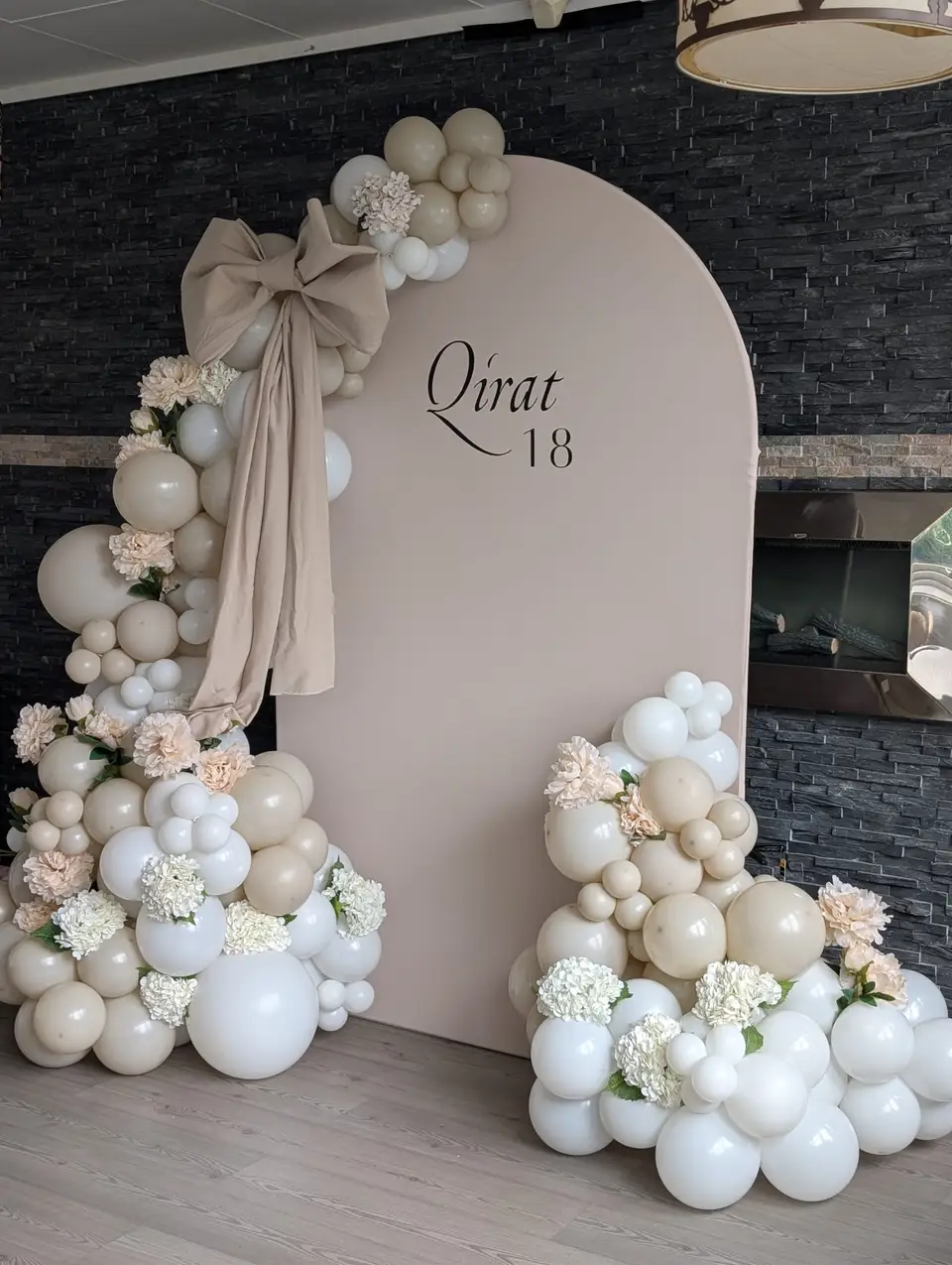
Ask the venue to have the room finished before the first guest walks in, not before the reveal. Here the decoration is part of the hall fee and our staff set it, so nobody is taping a balloon garland to the wall while guests hang up their coats. If you want the specifics of what the hall fee covers, they are on the prices page, and the room itself is described on our birthday page.
Where the cars go, and why it matters here
We have free parking on site at Højdevej 59, which is genuinely useful in this part of Copenhagen and, for exactly one evening, a liability. A car park in view of the entrance is a list of the guest list.
So give the parking its own instruction. Guests fill the spaces furthest from the door first, and anyone with a car the guest of honour would know on sight parks out of the direct line of the approach. The driver bringing them should arrive last and stop nearest the door, so the walk in is short and there is no slow tour past eight familiar number plates.
If people are coming by metro or bus there is nothing to hide, which is one argument for telling guests to leave the car at home. It also means nobody is counting their drinks on the way home.
Who brings them, and what they have been told
One driver. Not two, not a convoy. Pick the person who lies best under pressure, brief them properly, and give them three things.
A cover story that survives the address. This matters more on Amager than people expect. Højdevej is a residential street, so a story about dinner in town falls apart the moment you turn off Amagerbrogade and into a row of flats. Pick a cover that fits where you are actually going: collecting something from a friend, a quick errand on the way, someone's new place you have been meaning to see.
A timing rule. Early is worse than late. If they are ahead of schedule they drive a loop, take the long way round by the cemetery, stop for petrol. They arrive at the agreed minute or a few after it, never before.
One phone number. The host's, and only the host's. The driver sends one message when they leave and one when they are two minutes away. That second message is what turns forty people talking into forty people quiet.
Plan the ten minutes after the reveal, not just the reveal
The reveal itself lasts about four seconds and largely looks after itself. What follows is the part that goes wrong.
Someone who has just walked into a room of forty people tends to freeze in the doorway, still wearing a coat, while a queue builds behind them. So take the coat, put a drink in their hand at the door, and keep the gift table somewhere other than the entrance, because a pile of presents in the hallway is where the evening stalls.
Agree beforehand who films it, and where they stand: one person, facing the door, not six phones held up in a semicircle. And decide whether you want a shout or a quiet room. A quiet room full of people who then start clapping is often kinder on someone in their seventies, and it photographs better.
One practical advantage of a kitchen inside the same building is that the food waits for the reveal rather than the other way round. If the driver is fifteen minutes behind, the kitchen holds, and the first course still arrives hot once everyone is sitting down.
If you are planning one and want to see how the room sits before you commit, book a visit or get in touch. We are used to the enquiry that opens with a request not to reply to this address.