
Bara, chatamari and samay baji, and what a Newar table looks like
23 October 2026 · 5 min
Ask a Newar family in Copenhagen what belongs on the table at a celebration and the answer comes back as a list rather than as a menu. Beaten rice. Black soybeans. A lentil cake. Something charred. An egg, and a piece of ginger beside it.
That list is samay baji, and three of its parts come up often enough in planning conversations at Højdevej that they are worth setting out properly: bara, chatamari and the platter itself. The Newar are the people of the Kathmandu Valley, and this is their food rather than Nepali food in general. Saying so is not a flourish. It is the difference between naming a cuisine and naming the community that cooks it.
Samay baji is a platter, not a single dish
Samay baji is the Newar ceremonial platter, and what defines it is the arrangement. Beaten rice sits as the base. Around it go black soybeans, bara, choila, a piece of egg and fresh ginger. Nothing is plated to look like a starter. Each element is there because it has a job, and together they mark the day as one that is not ordinary.
Choila is the item most guests remember. The meat is charred over a flame first, then tossed while still warm in mustard oil, ginger, garlic, chilli and timur, so the smoke goes in at one end and the dressing at the other. It is worth knowing that choila is Newar too, not a generic Nepali grill.
The practical virtue of the platter, for a party in Denmark, is that most of it is at its best at room temperature. A welcome course that does not mind a speech running twenty minutes long is a gift to whoever is running the afternoon.
Bara, the lentil cake that behaves like a canapé
Bara is made from lentils that have been soaked and ground to a batter, then cooked flat in a hot pan until the edge crisps and the middle stays soft. There is no wheat flour in it. The batter can be left plain, or an egg or a little minced meat can be set into the top while the first side cooks.
For a party it does almost everything you want. It comes off the pan in batches, so a tray can be replaced rather than topped up. It is eaten in two bites with one hand, which matters while people are still standing. It is vegetarian before anyone asks for a vegetarian version. If allergies are in play, talk to the kitchen rather than assuming, because what sits beside a dish on a buffet is as much a part of the answer as the dish itself.
Chatamari has to be cooked where it is eaten
Chatamari is a rice flour batter spread thin across a hot pan, with the topping set into it as it cooks: egg, spring onion, minced meat, or vegetables if you would rather. You will see it called Nepali pizza on menus abroad. The comparison gets you to the right shape and then stops being useful. It is a rice crepe, and it tastes like one.
It is also the dish on this list with the shortest window. Chatamari is at its best within a few minutes of leaving the pan. Stack it, cover it, drive it across the city, and it steams itself soft on the way. That is the honest reason it is rare on catering lists, and the reason it works here, where the food is cooked in the building and crosses a corridor rather than a postcode.
If you want it at your party, run it as a station early in the evening while guests are arriving and the room is still on its feet, rather than as one more tray in the middle of a buffet.
Is any of it spicy, and can the whole table be vegetarian
Two questions, and both have short answers.
On heat: most of the chilli in Nepali cooking lives in the achar, the pickle set beside the plate, instead of being built into every pan. Lay the buffet out that way and each guest settles their own heat without a word being said. Timur, the pepper in a choila dressing, is sharp and citrusy rather than hot. Nepali food also leans away from cream and sugar in savoury dishes, which is why it tends to taste cleaner than people expect.
On vegetables: any menu can be made fully vegetarian. Bara is already there. Chatamari takes a vegetable topping without being a compromise. Choila is the one element built around meat, so ask the kitchen what they would put in its place rather than letting the platter arrive with a gap in it.
Putting a Newar table in front of 30 to 120 guests
One hall, one kitchen, and the same team cooking and serving. That combination is what makes this food practical at party scale, more than any single recipe does.
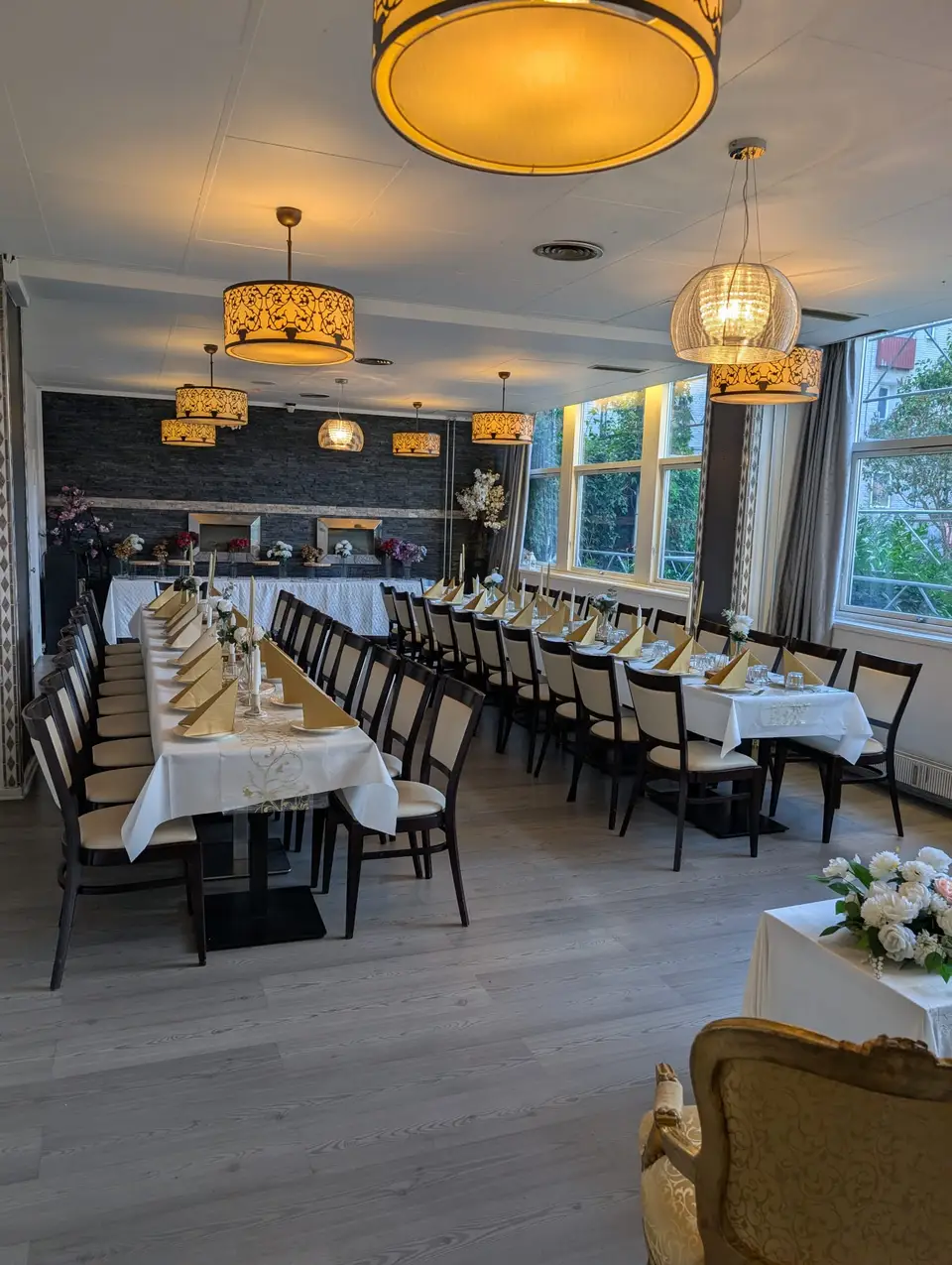
A running order that works: samay baji out as guests arrive, bara coming warm from the pan in batches behind it, chatamari made to order at a station while the room is standing, and the full meal once everyone has sat down. The hall takes 30 to 120 guests, which is the size at which a kitchen can still cook things to order instead of only in bulk.
Menus are built per person, as set menus or as a custom menu put together with the kitchen, and you can see how that is priced on the menus and prices page. If a Newar table is what you have in mind, say so early, because some of it is decided at the pan rather than on the order form. Read more about Nepali catering in Copenhagen, or book a visit and taste the argument instead of reading it.