
What sound and music setup does a party need?
25 October 2026 · 5 min
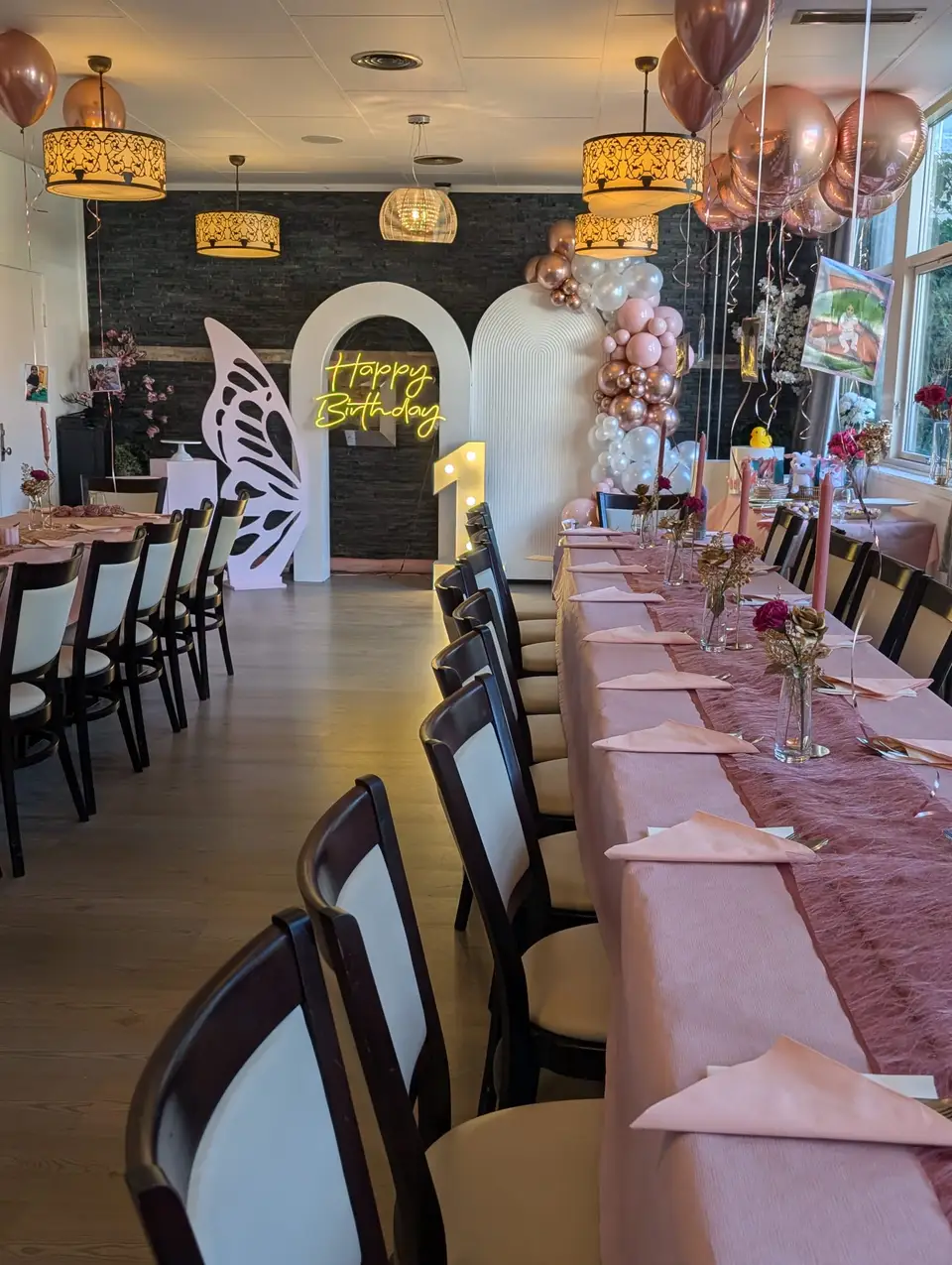
A microphone that carries a speech will not make a dance floor, and two speakers set up for dancing make a speech unlistenable. Almost every worry about music before a party comes back to that single confusion, and it falls apart as soon as you treat the two as separate jobs.
Here is what each one actually needs in a room of 30 to 120 guests, and where the line sits between a house system and a hired one.
Speeches and dancing are two different problems
A speech needs to be understood. One voice has to reach the far end of a long table over cutlery, chairs and eighty people who were mid conversation a second ago. What that asks for is a microphone and a modest, even volume spread across the whole room. Loudness is not the goal, and too much of it turns a voice to mush against hard walls.
Dancing needs the opposite. It wants weight, bass and a volume that makes standing still feel wrong, concentrated where people are actually dancing rather than sprayed over the tables where the grandparents are still finishing coffee.
So plan three settings rather than one. Background, for arrival and the meal, quiet enough that a table of eight can talk without raising their voices. Speeches, where the music is off rather than merely turned down, because a room will not stop talking for music that only got quieter. Dancing, after the coffee, when the volume goes up and the lights come down together.
Write those three into the running order. They take seconds to agree now and are impossible to agree at nine in the evening.
What is already in the room, and what it covers
Our hall has its own sound system, and it is part of the hall fee along with decoration, projector, staff and cleaning, so there is nothing to hire or carry in for an ordinary party. The prices page sets out the shape of that fee.
In practice the house system covers a playlist from a phone or a laptop, a microphone for speeches and toasts, the first dance or the bridal waltz, and music under a buffet. For a confirmation, a christening, a reception, a company dinner or a birthday, that is the whole requirement. It is also enough for most weddings where the dancing is an hour or two at the end of the night.
Four things are worth settling before the day:
- Who connects the music, and whether they are bringing a cable or expecting to pair a phone.
- Where the speakers stand, because the seats closest to them are the loudest seats in the building and that is a seating decision.
- Whether anyone else needs the microphone, so a second speaker is not hunting for it mid toast.
- That the playlist is downloaded to the device rather than streamed, and the device is set to do not disturb. A message tone through a sound system during a speech is the one technical failure guests always remember.
Build the playlist in three blocks that match the three settings, and make each one longer than you think the block will last. Music that runs out is far more noticeable than music nobody chose.
When a DJ or a band earns the booking
Hire someone when the dancing is the point of the evening rather than the ending, when the party will run for hours after the meal, or when the room holds two musical worlds at once. A wedding that brings a Danish family and a Nepali family together is the clearest case: someone has to read which half of the floor is sitting down and change the direction of the night, and a playlist written on a Tuesday cannot do that.
If you do book a DJ, tell them the room honestly. One hall for 30 to 120 guests, no separate bar area, no second space to send the sound into. A rig sized for a club is the wrong tool here, and a good DJ will scale down happily once they know. Agree what time they can load in, where they will stand, how much floor the speaker stands need, and what time the music has to stop.
Loading in is easier here than in most places. Parking is free and on site at Højdevej 59, so a DJ carries flight cases a few metres from the car to the door, which is not something every address in Copenhagen can offer. If a band is coming instead, ask what they need for their break and have recorded music cued to fill it. In one room, a silent twenty minutes empties the floor.
What the projector is genuinely useful for
The projector comes with the room too, and it is better at some jobs than others. It is good for photographs during the meal, a printed running order the back table can read, the words to a Danish party song so nobody is squinting at a sheet, a quiz at a company party, or a greeting recorded by family who could not travel.
It is poor at anything that wants the lights off for a long stretch. A film during dinner kills the conversation it was meant to decorate.
Two practical notes. Export anything you show as large, simple slides, and test the file in the room before guests arrive. And point the projector away from where the speeches happen, so nobody stands in their own slideshow.
Give one person the job of pressing play
Not the host, and not the guest of honour. Pick someone who will be in the room all evening, hand them the running order, and let them own every cue: when the music drops for the first speech, what plays as the cake comes in, the first dance, and the last song of the night.
Coffee is where parties lose their nerve. The plates have gone, nobody has decided what happens next, and the room starts to thin out. Someone whose job it is to lift the volume at that exact moment is worth more than any equipment you could hire.
Come and stand in the room before you decide any of it. Book a visit and walk to the far end of the hall, or read how the space is usually arranged on our party hall page, and the sound plan will mostly write itself.