
A confirmation menu that suits children and adults
20 November 2026 · 5 min
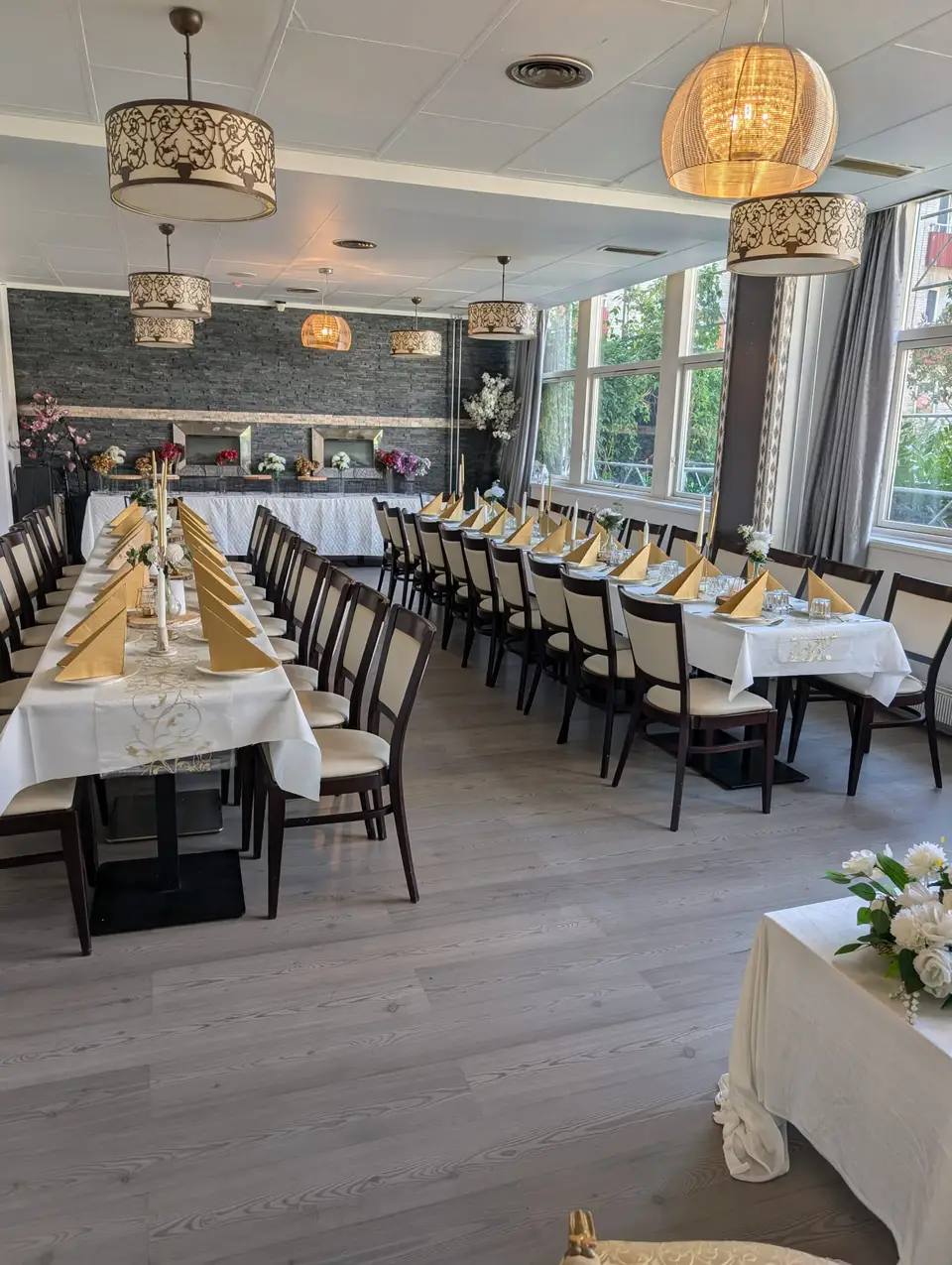
The confirmand is thirteen or fourteen. The youngest cousin is five. The oldest guest at the table has been to more confirmations than everyone else in the room put together. All three are handed the same menu, on the same afternoon, from the same buffet counter.
That is the real difficulty with a confirmation menu, and it is not a question of taste. It is three appetites arriving at once, with one kitchen behind them.
Three generations, one buffet
A confirmation guest list is unusually wide for a family party. There is the confirmand's own table, a row of classmates all within a year of each other. There are younger cousins and siblings, some of them small enough that the chair matters more than the food. There are parents, aunts and uncles. And there are grandparents, who have strong views about what a confirmation lunch ought to look like.
At Højdevej 59 there is one hall and one buffet counter along the dark stone wall, whether you are thirty guests or a hundred and twenty. Everybody walks to the same table. That sounds like a limitation, and it is actually what makes the afternoon work. Nobody is served around, nobody has a different plate carried out to them, and a nine year old can take exactly what her grandfather is taking.
So the answer is not three menus. It is one menu built so that three different eaters can each find four things on it they want.
Your confirmand's friends are not children on the menu
This is the line that catches most families out while they are still counting heads.
Children aged 5 to 12 pay half the menu price. Your confirmand is thirteen or fourteen, and so is every classmate on the list. On the price list those guests are adults, and at the buffet they behave like adults with a longer afternoon behind them.
So write your list in three columns rather than two. Guests aged 5 to 12 at the child price. Everyone from thirteen upwards at the full menu price. And anything outside that band settled with us in writing before you book, so there is no conversation about it on the day. Set menus start from 180 DKK per guest, and what the hall fee covers sits beside them on the prices page.
The practical consequence at the table is smaller, but it is worth planning. The classmates will reach the buffet first and come back for a second plate before most of the adults have finished their first. Let them. Send that table up before the grandparents are out of their chairs, and the queue sorts itself out instead of forming twice.
Put the mild food in the middle and the heat beside it
Nepali cooking does not usually bury chilli in every pot. The heat generally sits in the achar, the pickle served alongside, rather than cooked through the curry. That is the honest reason a Nepali buffet can suit a five year old and her uncle at the same sitting, and it is worth building on deliberately.
- Dal bhat tarkari is the mild floor of the table. Dal, rice and tarkari reach the plate together, and a child who touches nothing but the first two has still had a proper meal and not a concession.
- Momo, steamed dumplings in a thin wheat wrapper, are what empties first at every age. Ask for the achar in bowls next to the tray rather than spooned over the dumplings, and the same dish feeds the cautious and the curious.
- Sekuwa is meat left in a marinade and then grilled over charcoal, a speciality of the eastern hills. It is the tray the classmates come back to.
- Choila is a Newar dish. The meat is charred first and then dressed with mustard oil, garlic, ginger, chilli and timur. Send the adults who want something sharper than the rest of the table to that bowl.
One small card at the head of the buffet saying what each tray is will do more for your guests than any amount of explaining during the speeches.
Vegetarian as a whole menu, not a plate set aside
Any of our menus can be made fully vegetarian, and that matters more at a confirmation than at most parties. The vegetarian guest at a confirmation is very often a fifteen year old who decided last spring, sitting next to a grandmother who is quietly certain the child will go hungry.
The point is that nothing is removed and replaced. Dal bhat tarkari is vegetarian at its heart. Vegetable momo earn their place on the counter on their own terms and are not standing in for the chicken ones. Gundruk, fermented leafy greens, is sharp enough to hold its own beside anything else on the counter. A vegetarian plate at that buffet should look like a full plate, not like a plate somebody had to think about.
Decide early how many guests this applies to, and say it in the same message as the headcount. Our Nepali kitchen is in the building, so the vegetarian trays are cooked in the same service as everything else, not fetched from somewhere afterwards.
What to tell the kitchen, and when
When you confirm the booking, send five things: the number of guests aged 5 to 12, the number from thirteen upwards, any allergies by name, how many plates need to be vegetarian, and the time you want the buffet opened.
Timing is the one families underestimate. A church service in the morning and a long drive back across Amager means the small children have been in good clothes for hours by the time they sit down, and the gap between arrival and food is where an afternoon turns restless.
The last thing worth knowing is that our kitchen is still cooking while you eat. The buffet is not a fixed quantity set down before the guests arrive, so a tray that empties faster than expected gets refilled during the service, and a plate of plain rice and vegetables can be put together on the spot for the one child who will not touch anything else.
Come and look at the room before you settle the menu. Walk the buffet line, tell us the ages around your table, and we will tell you honestly what works. You can book a visit to the hall any day of the week, and there is free parking on site, which the grandparents will notice before anything else.
Prices are taken from our current price list on 22 November 2026. The full list is on the prices page.