
Danish wedding traditions: the socks and the veil
21 November 2026 · 5 min
Somewhere late in the evening, four men lift the groom off the floor and a fifth one goes looking for scissors. If you grew up in Denmark you already know how this ends. If you did not, it looks for about three seconds like the beginning of a fight.
Neither of the two customs in this post is written into the running order. Nobody announces them. They are started by guests, they are over in a minute, and they are the two things a guest who is new to a Danish wedding asks about afterwards. In a room where one family has done this at every wedding since childhood and the other family has never seen it, somebody has to do the explaining, and it goes better when that somebody has been chosen in advance.
Why the groom's socks get cut
The sock cutting follows the bridal waltz, usually within a few minutes of it. The groom is hoisted up, held more or less horizontal by whoever is nearest, and the toes are snipped out of both socks while he hangs there.
Two explanations circulate, and Danish families tell whichever one they were told. The first is that the cut sock marks the end of his days as an eligible man, a visible sign that he is spoken for. The second is that his wife now has her first household task, which is mending them. Neither is documented history and nobody doing the cutting much minds. It is a piece of theatre with a very old shape.
What it asks of you is small and worth deciding beforehand:
- Wear socks you are happy to lose. Thin cotton cuts cleanly. A thick wool sock turns the whole thing into a sawing contest.
- Put the scissors in one named person's pocket. A minute spent hunting for them in a bag is the difference between a good moment and an awkward one.
- Warn your photographer that it may happen. It is quick, it is low to the ground, and it is easy to miss while changing a lens.
The veil, and the pieces that go home in handbags
The bride's half of the custom runs on the same logic. She is lifted by the women guests, the veil comes off, and it is cut into small pieces that are passed around the room. Each guest keeps a piece as a token of luck. In some families only the unmarried women take one. In others everybody gets a fragment and the pieces turn up in coat pockets for weeks afterwards.
The tellings vary here too. One says the cut veil marks the end of being a girl and the start of being a married woman. Another simply holds that the fragments are lucky. Both are the kind of folk explanation that outlived whatever it originally meant.
The practical point matters more than the symbolism. If the veil is borrowed, inherited, or the expensive part of the outfit, buy a plain second veil for the cutting and keep the real one somewhere safe from eight o'clock onwards. Plenty of brides do exactly this. What goes wrong is not the plan, it is that nobody tells the woman holding the scissors which veil is which.
When the cutlery starts ringing
The same guest-led logic runs through the whole dinner, and new guests notice it first at the table.
Tap a glass or ring a knife against a plate and the couple is expected to stand up and kiss. In some families they are expected to stand on their chairs to do it. Stamp your feet on the floor and the couple goes under the table instead. There are further local variations: when the bride leaves the room, the other women may queue up to kiss the groom, and when the groom leaves, the men do the same with the bride.
Families genuinely disagree about which of these apply, so settle yours early and give the list to whoever is running the evening. A toastmaster who knows that your table does feet but not chairs can head off the one well meaning uncle who starts something you did not want.
Saying it once in each language
If half your guest list grew up with these customs and half did not, treat the explanation as part of the planning rather than as something that will sort itself out.
Three things work. Put a short line on the place card or the menu card in both languages, so a guest can read it rather than ask. Brief whoever holds the microphone to say it twice, once in Danish and once in the other language of the room, before the dancing starts rather than during it. And ask one person on each side of the family to field questions, so the explaining is not left to the couple.
Our hall sits beside a Nepali kitchen, and a wedding here often has a Danish family on one side of the room and a family from somewhere else on the other. The customs travel fine. What does not travel is a surprise.
What the room has to give you
All of this needs clear floor, and more of it than it looks. Lifting a grown man takes four people standing around him with their elbows out, and the crowd closes in to watch.
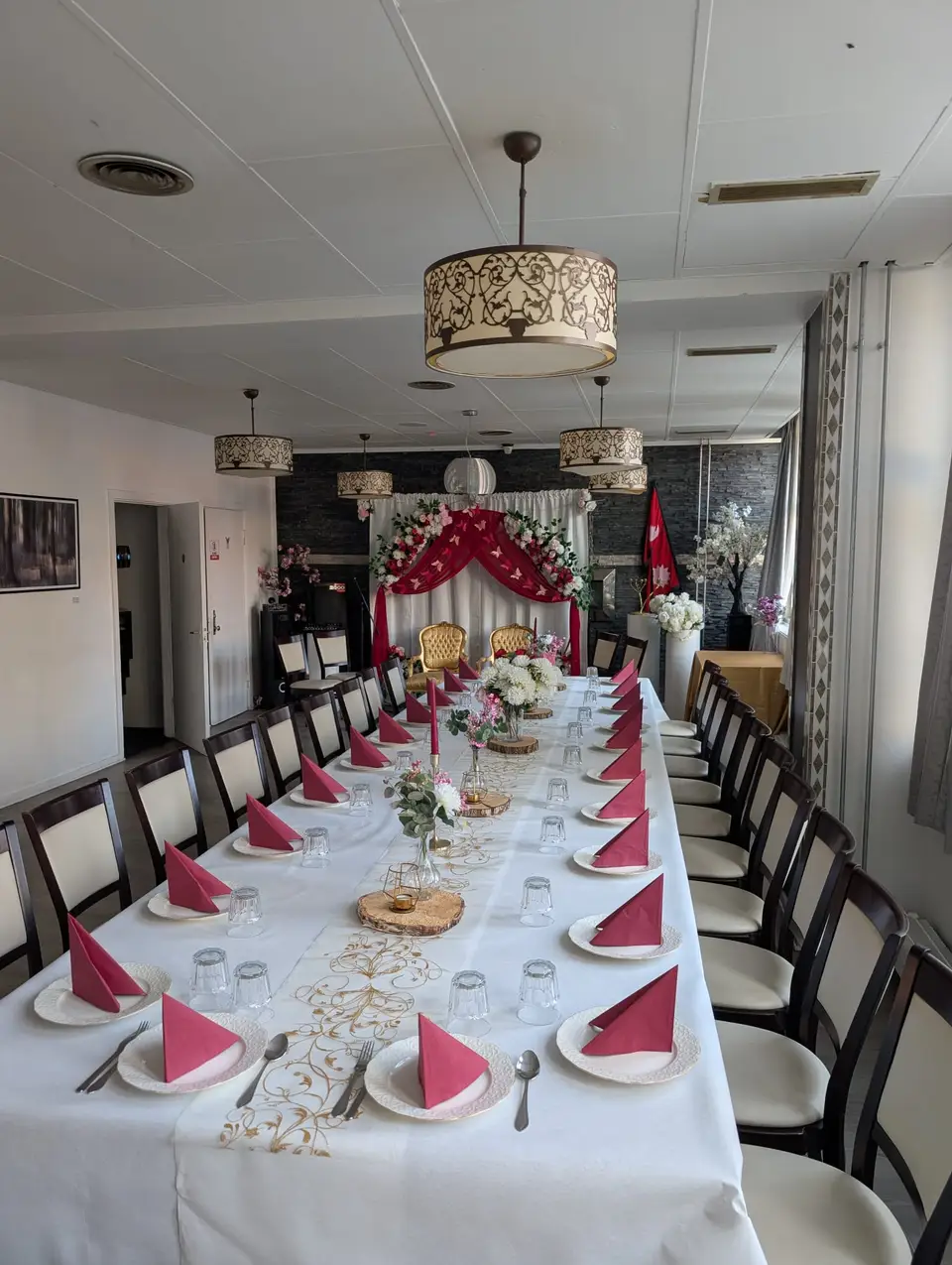
At Højdevej 59 there is one hall, for 30 to 120 guests, so the floor you clear for the waltz is the same floor the socks happen on. The two gilded chairs stand at the open end of the room against the draped backdrop, which means the couple is already where the room can gather around them, and you are not moving anybody between spaces at half past eleven. The kitchen is in the same building, so service can pause for five minutes and pick up where it left off.
One more thing nobody plans for and everybody notices. These customs push the evening well past eleven, and parking is free on our own site, so no guest spends the last hour of your wedding wondering about the car.
Come and see the room before you decide. Book a visit or read more about weddings at Maiya, and we will happily walk through the running order with you, scissors included.