
How many guests should you invite to a christening?
13 August 2026 · 5 min
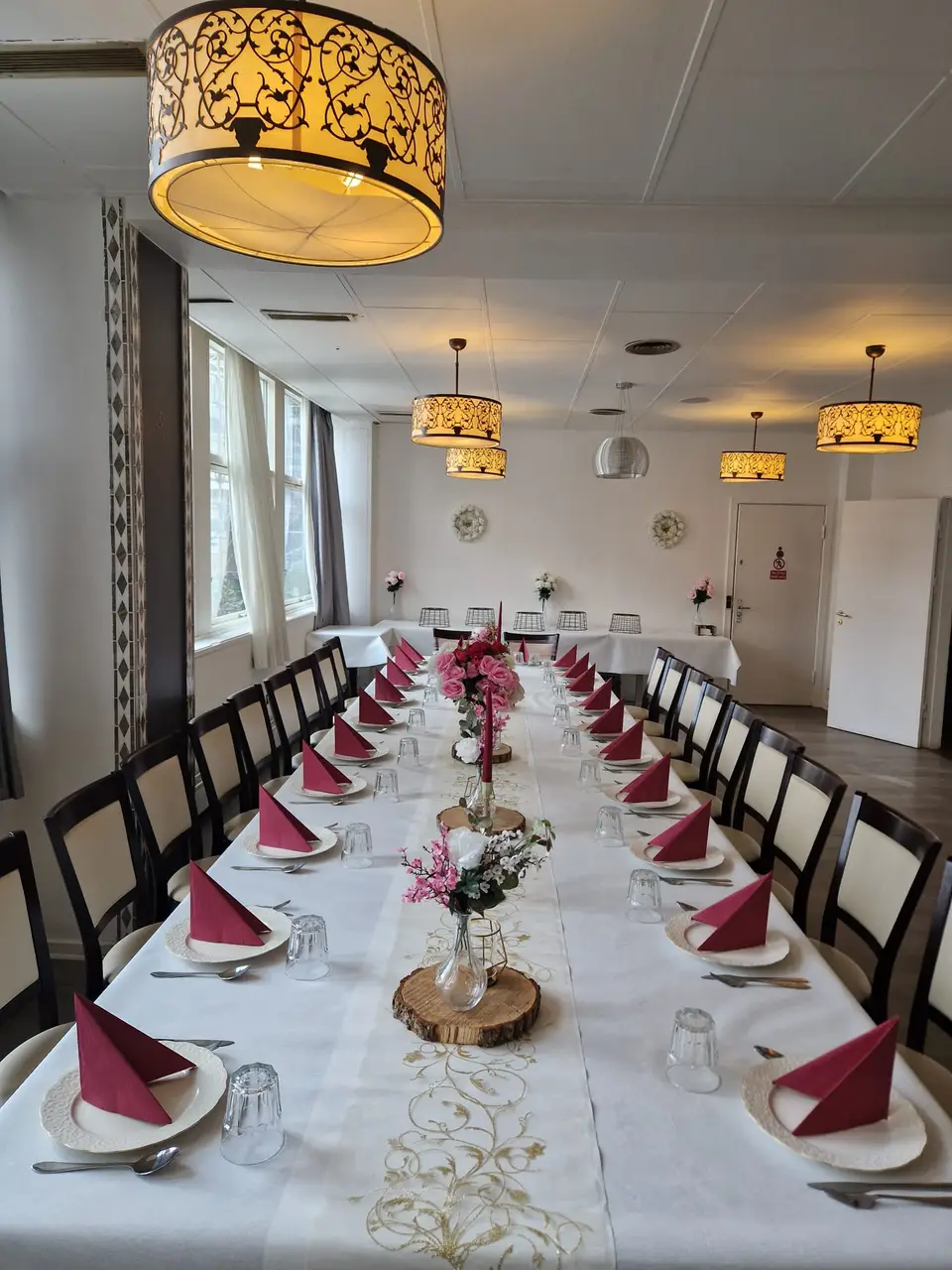
A christening produces two guest numbers, and most families only notice the second one when a venue asks for it. One number belongs to the church. The other belongs to the lunch afterwards, and that is the one every supplier means.
Start where the day starts. The faddere come first, because they are the only names on your list that anyone outside the family has a say in.
Start with the faddere and count outward
Your parish decides how many faddere a child may have. There is a floor as well as a ceiling, so ask the church office for both figures before anyone is promised anything. Families who ask afterwards have usually told one person too many already.
Then write down what comes attached to each of those names. A fadder rarely arrives alone: a partner, usually children, sometimes a household of four. Do that on paper and a third of your list exists before you have made a single awkward decision.
Grandparents and the child's brothers and sisters follow without discussion. So do the parents' own siblings, with their children, and they arrive as households rather than as names. That is where the number gains its weight. You are not adding one guest at a time, you are adding families of three and four, which is why a list of "just the closest people" so often lands near fifty.
The two numbers families confuse
The first number is who stands in the church. The second is who sits down to eat.
They are almost never the same, and only the second one can be booked. The church has its own capacity and its own practice for the service, and your parish is the only place that can tell you either. Ask in the same conversation where you agree the date, not in the week before.
Write one sheet with two columns, church and lunch, and tick each name in the column it belongs to. Most people get two ticks. Some get one: the colleague who would like to see the ceremony and has their own Sunday to get back to, the great aunt for whom a long afternoon is too much, the friends who come after the service because their toddler sleeps at noon.
Those two columns prevent the most common miscount of the whole day, which is assuming that everyone in the pews will also be at the table. The lunch column is the number you give us, and it is the number that decides the room, the food, the chairs and how long the speeches can run.
Nobody is owed an invitation to a christening
A wedding carries obligations. A christening carries almost none, and families are often relieved to hear it. Nobody has to be invited because you were at theirs, and no one counts who was left out. The guest of honour is a few months old, will be asleep by the middle of the afternoon, and has no opinion about the seating.
That matters because the deadline is short. A child in Denmark has to be named before six months, so you are settling a date, a church and a guest list while a newborn is in the house. Give the number one evening rather than six weeks of small revisions.
The practical version: write the list once, put a household on each line, add the running total in the margin, and stop at the first number that still feels like the day you wanted. Then let it be. Our post on the hour between the church and the first plate covers what to do with the rest of the timetable once the count is settled.
What your total does to the room
Ours is one hall for 30 to 120 guests at Højdevej 59 on Amager, so the count does not change the venue. It changes how the room is laid.
Up to about 45, one long table down the length of the room is the best shape a christening can take. Everyone sits in a single conversation, a speech works from a chair rather than from a microphone, and the child can travel from arm to arm along one table without anybody standing up. It is the layout in the photograph above, with a few smaller tables set at the far end for the guests who arrive late from the church.
From about 60 upwards the room splits into groups, with a main table and satellites, and the buffet is worth opening from both sides so that nobody queues along the wall while the coffee is being poured.
At either size, one thing stays true and it is worth choosing a venue for: there is no overflow room down a corridor. No branch of the family gets seated out of earshot of the speeches. Tall windows run down one side of the hall, which is why a midday lunch here happens in daylight rather than under the pendant lamps, and why photographs taken at the table look like the ones taken outside the church.
Give the venue one line, not a spreadsheet
When you enquire, four figures and a time will get you a real answer:
- the total from the lunch column
- how many of those are children aged 5 to 12, since children aged 5 to 12 pay half the menu price
- how many are under five and will not need a menu at all
- how many are vegetarian, because any menu can be made fully vegetarian
- the time the service ends
That is enough for us to lay the room, plan the buffet and tell you what the afternoon costs per person. You will find the two per person lines, the room and the food, on the prices page, and the christening page covers what comes with the hall.
Two smaller things ease a day with a baby in it. Parking on site is free, so the pram, the cake and the gifts come out of the car a few metres from the door. The kitchen is in the same building, so if the service runs long, the food waits for you instead of the other way around.
Bring the list and stand in the room before you finish it. Book a visit and we will show you what your own number looks like with chairs around it, or send us the date and the total and we will answer with the layout we would suggest. Call +45 21 95 92 92 or write to info@maiya.dk.