
What are timur and jimbu?
12 October 2026 · 5 min
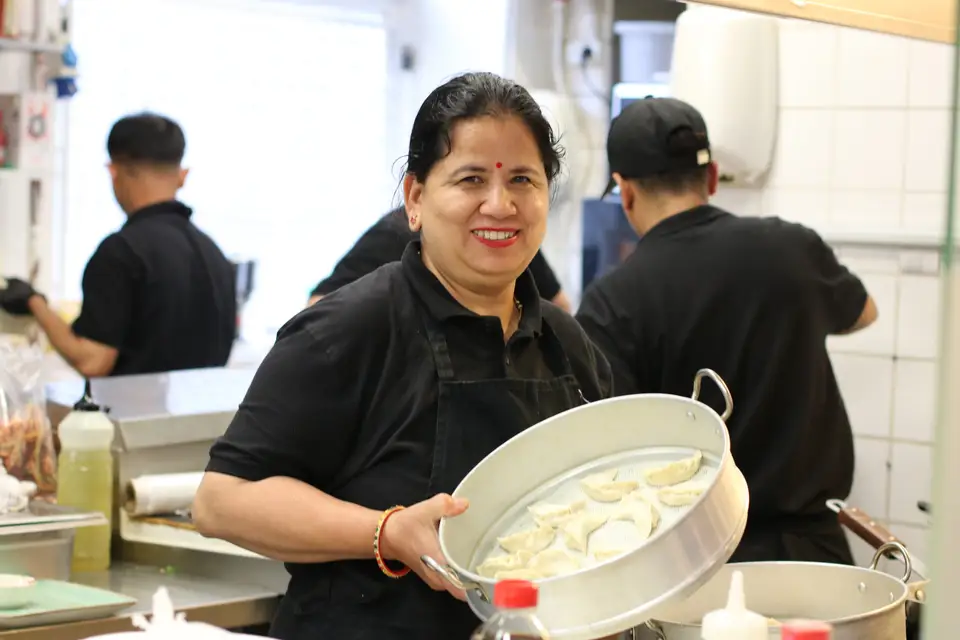
Most of what sits in the spice drawer in the kitchen at Højdevej would be recognisable to any Danish cook who has made a curry. Cumin, coriander, turmeric, cardamom, fenugreek, bay. Those have travelled everywhere, and they are the reason so much South Asian food smells like a family to people who have never cooked it.
Two things in that drawer have not travelled. Timur and jimbu are the two spices in regular Nepali cooking that stayed at home, and they are most of the answer to why a plate of Nepali food does not taste like a plate of Indian food standing beside it on the same buffet.
Timur, which tastes like citrus peel with an edge on it
Timur is not a peppercorn, whatever the shape suggests. It is the dried husk of a small berry from a thorny shrub, and it belongs to the citrus family rather than to black pepper. Its closest culinary relative is the spice sold in Europe as Sichuan pepper, which comes from the same genus.
What it tastes of is easier to describe than most spices, because it is so specific. Grapefruit peel. Something resinous behind it, closer to pine than to pepper. A cold, bright snap that arrives at the front of the mouth rather than the back. It is sharp without being hot, and that distinction matters more than any other thing in this article.
The small black seed inside the husk is gritty and carries almost nothing, so the husk is the part that counts and good timur is sorted before it is used. The aroma is volatile, which is why a cook toasts it for a moment, crushes it coarsely, and adds it late. Grind it in advance and you are using a weaker spice by the time it reaches the plate.
Jimbu, which does nothing at all until it hits hot fat
Jimbu is a dried allium, the leaves of a wild relative of the onion, dried in fine dark strands that look more like hay than like a spice. Open the bag and it smells faintly of a dry meadow. Chew a strand and you get very little. People who have been handed some to try are usually unimpressed, and they are right to be, because at that point it has not done anything yet.
It only works bloomed. A spoonful of ghee or oil is brought up to heat, the jimbu goes in for a few seconds, and it opens into something between chive, leek and softly roasted garlic. That hot fat is then poured over the finished dish, which is the technique a Nepali or Indian kitchen calls the tempering. The spice is not an ingredient you stir in. It is an ingredient you deliver.
The window is narrow in both directions. Too cool and it stays hay. Too long and it turns bitter and there is no rescuing the pan. This is the one spice in the drawer where timing, rather than quantity, decides the result, and it is the reason jimbu tends to be the thing a cook learns last.
Are they hot? No, and that changes how a menu is planned
Neither one is a chilli. That is worth stating plainly, because it is the first thing a Danish host wants to know and the thing most often got wrong.
In Nepali cooking the chilli usually lives in the small bowl at the side of the plate, not stirred through the whole pot. Each guest sets their own level with a spoon. Nothing savoury is softened with cream or sugar either, and the vegetables keep their edges instead of being blended smooth, so a mild portion is still a portion with structure in it.
Timur and jimbu are a large part of why that works. Turn the chilli down and the citrus and the allium are both still there, doing the job people assume heat is doing. Few cuisines survive that subtraction, and it is the reason this food suits a guest list running from a toddler to a grandmother without turning into two separate dinners.
Where you actually meet them on a plate here
- Choila, a Newar dish in which the meat is first charred over a flame, then dressed with mustard oil, garlic, chilli, ginger and timur. It is the clearest introduction to timur there is, because nothing else in the bowl competes with it.
- Achar, the pickles and relishes served beside the meal, where timur does the sharpening.
- Dal, where jimbu belongs. A lentil soup finished with bloomed jimbu is a different dish from one that was not.
- Momo and the sauces that come with them, which are the first Nepali thing most Danish guests eat and usually the thing they ask about afterwards.
What a menu can be built from, and how the set menus and custom menus are put together, is laid out on the catering page.
Why a kitchen in the building changes what these two can do
Jimbu's bloom has a short life. The tempering goes over a dish shortly before it leaves the pass, and an hour sitting in a closed box flattens it back into something ordinary. Timur fades the same way, which is why a cook crushes it at the last minute instead of the night before.
Both spices therefore reward being cooked near the people who are about to eat. That is the quiet argument for how Maiya Party Hall is laid out. The cooking happens inside the same building as the hall, a short walk from the tables, done by the people who then carry it out. Only one party is in the room at a time, no fewer than 30 guests and no more than 120, so a buffet tray gets topped up from a pan that was over a flame minutes ago.
It also means you can ask for things. Timur further forward in the choila, a heavier tempering on the dal, a milder achar for the children's end of the table: these are questions for the cook, not amendments to a contract. Ask them standing in the room where the party will happen. You can book a visit to see it, and what each menu holds, along with everything the hall fee covers, is set out on the prices page.