
Who can be a godparent in Denmark, and how many?
5 September 2026 · 5 min
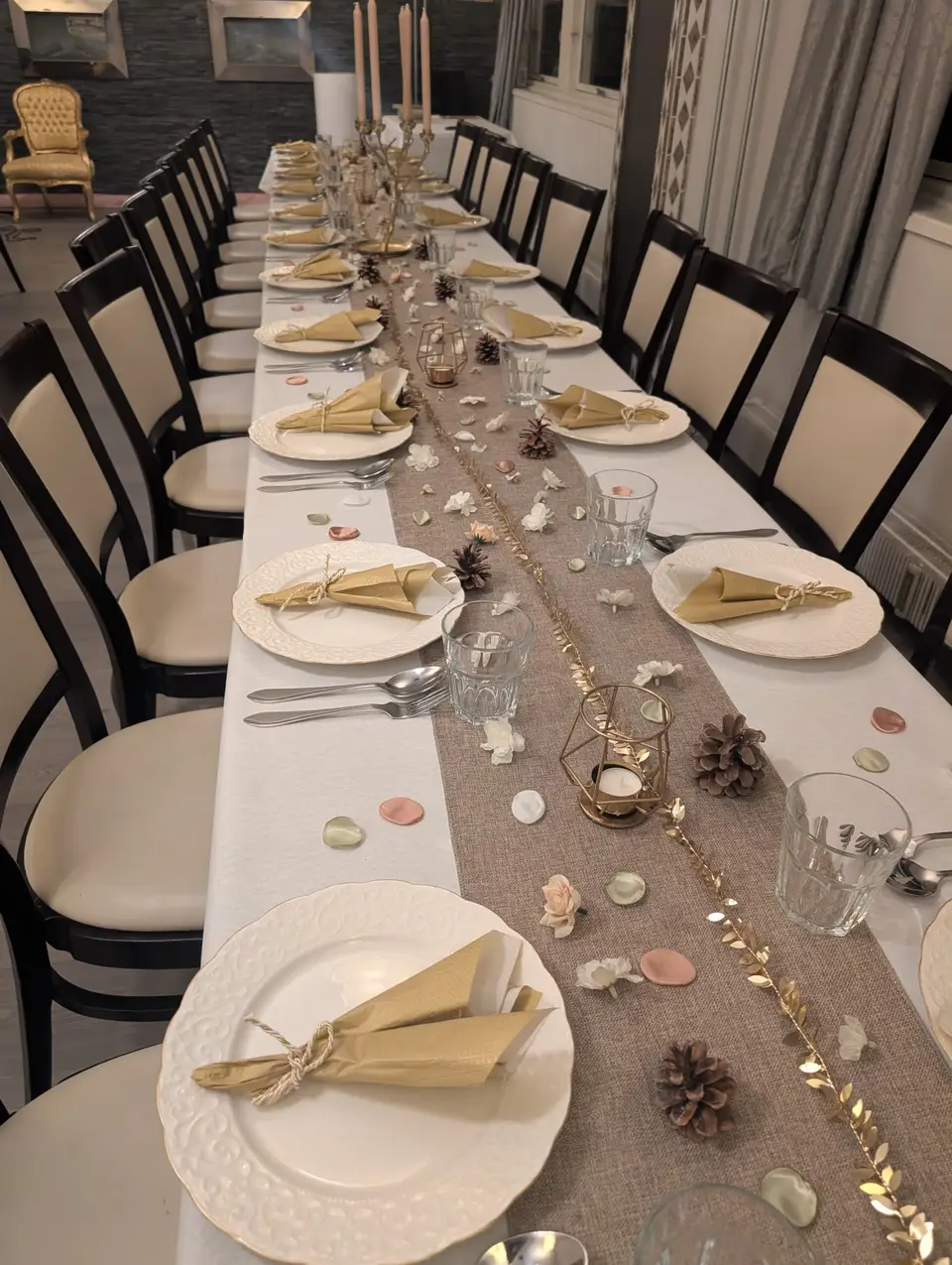
Being asked to be a fadder is one of the few invitations in Danish family life with no end date on it. It is agreed over a coffee and kept for decades, which is why parents spend longer on this handful of names than on the church, the menu and the cake put together.
Two questions arrive in the same conversation: who is allowed to be one, and how many of them there should be. The church answers the first. You answer the second, and that answer sets a surprising share of the guest list before you have invited a single friend.
What the church asks of a fadder
The formal requirements are short. A fadder must be baptised with a Christian baptism, and must be old enough to have been confirmed. The second condition is the one that catches families out, because it usually rules out the older cousin everybody assumed would be included. Say it out loud early, before anyone's feelings are attached to the idea.
The child's own parents are not counted among the faddere. They are already responsible for what the faddere are there to witness, so their names sit outside the list rather than at the top of it.
The person who carries the child to the font, the one your family will call gudmor or gudfar, is normally one of the faddere too. Settle who that is when you settle the date.
Numbers are set by the church rather than by you, and there is a smallest as well as a largest. Your parish office holds both. Ring them, write the two figures down, and ask one more thing while you have them: whether a fadder who cannot travel that day can still be entered in the register. Practice varies between parishes, and the answer decides whether a name on your list is really available.
What a fadder is not, and why it matters
The most common misunderstanding about the role is a legal one. A fadder is not a guardian. Asking someone gives them no automatic right or duty to care for your child if something happens to you, and it settles nothing on that front. Who would look after your child is a separate matter, settled in writing, and the person to ask about it is a lawyer rather than a priest.
What the role does carry is a promise about the child's upbringing in the faith, made in front of the congregation. Alongside it sits the part most families are really choosing for: an adult in that child's life who is not a parent, who turns up to the confirmation and can be telephoned about the things a fourteen year old will not raise at home.
Read the role that way and the choice gets easier. You are not appointing a trustee. You are naming the people you expect to still be at the table in fifteen years.
How many to choose
The ceiling your parish gives you is a limit, not a target. Most families land comfortably below it.
A few things are worth weighing before you fix the number:
- Balance between the two sides of the family. Nobody says anything if one side has three faddere and the other has one, and everybody counts.
- Durability over gratitude. Choose the friend who will still be in your life when the child is at gymnasium, not the one you owe a favour to this year.
- Whether you are choosing couples or individuals. Two spouses as two faddere is common and it uses up two of your places on one household.
- The one or two people you would be sad not to name, who cannot be entered because they were never baptised.
That last case has a simple answer, and it saves an awkward conversation. Give them a genuine part in the day instead of a place in the church register: a speech at the lunch, the child during the photographs, godmother in everything except the ministerial book. Nobody minds the distinction once the role itself is real.
Every fadder brings a household with them
The fadder list is the one part of a christening guest list that grows by multiplication rather than addition. Ask one more person and you have generally asked a partner as well, and often two children who will spend the afternoon under the table. Five faddere can be fifteen or sixteen chairs before a single grandparent has been written down.
That is an argument for settling this list first, not for cutting it. These are the only names you cannot revise once they have been said out loud. Our guide to counting a christening guest list picks the arithmetic up from there and carries it to a total.
The reverse mistake is worth naming too. Do not trim the faddere to fit a room you have not booked yet. A room is far easier to change than a sentence you have to say to your sister.
What that list looks like in one hall on Højdevej
There is a single hall here at Højdevej 59, in 2300 København S on Amager, laid for 30 to 120 guests. One room has a specific consequence for this list: every fadder sits inside the same conversation. Nobody who promised something in front of the congregation that morning ends up around a corner, out of earshot of the speeches, which is where the extra households tend to land in a venue with a second room to fill.
Tall windows run down one side, so a lunch beginning at midday is lit by daylight, which counts when the faddere are photographed one at a time with a sleeping baby. Parking on the site is free, and these are the guests who arrive with prams, car seats and a change of clothes. Our christening page shows how an afternoon like this is normally run.
Bring the names, then stand in the room
Get the two numbers from your parish first. Write the faddere down, add the households behind them, and only then count the rest of the family.
Then come and see the room that total has to sit in. Book a visit for a day that suits you, or ring +45 21 95 92 92 with the date and the number. Our prices page sets out the hall fee beside the menus, which are priced per person and can be made fully vegetarian.