
Can you bring your own food to a rented party venue?
4 October 2026 · 5 min
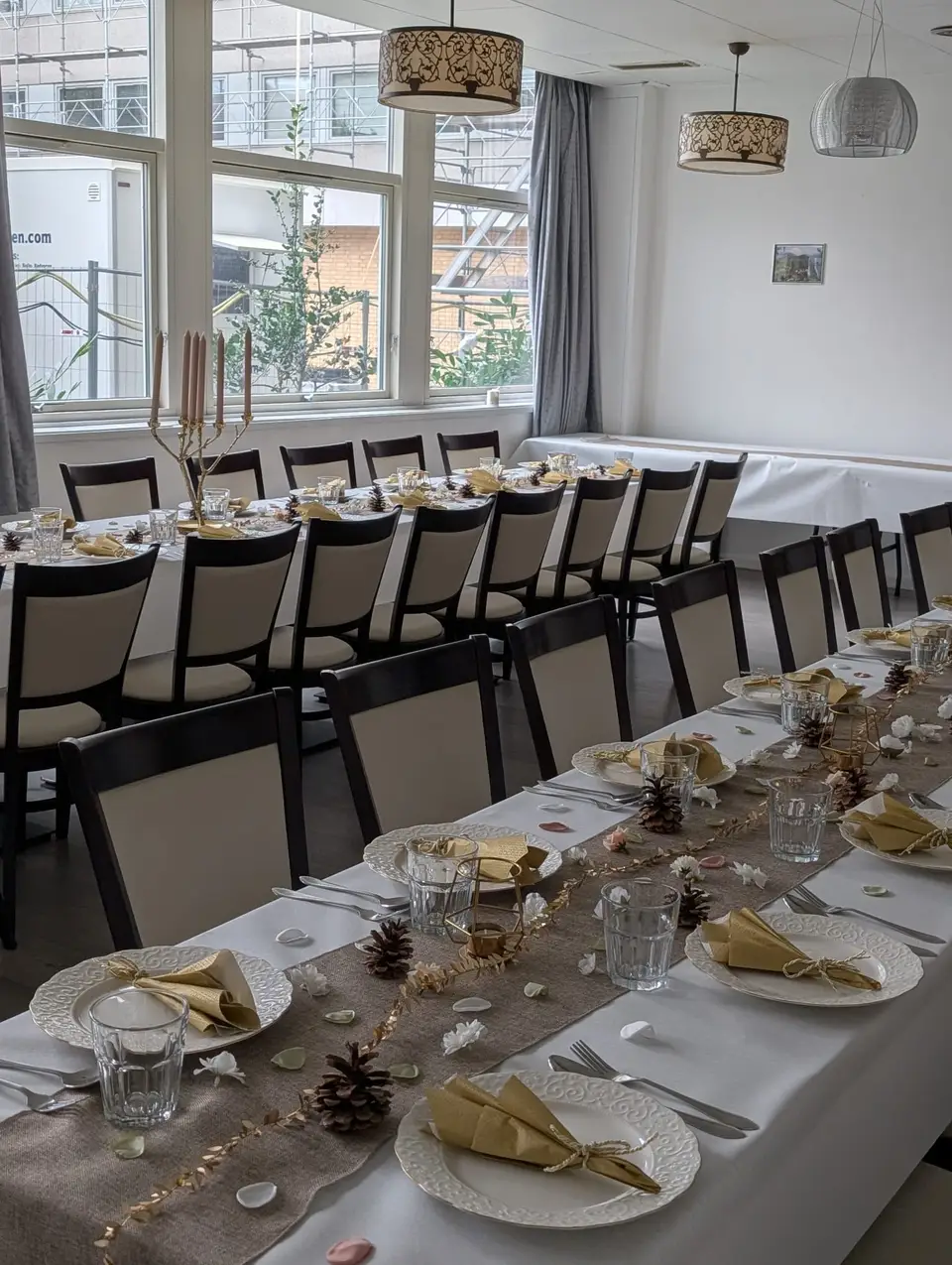
Ask ten halls in Copenhagen whether you may bring your own food and you will get yes, no, and a long pause. The pause is the interesting one, because it usually means the venue allows something narrower than what you are picturing.
It is worth sorting out early. The answer decides who cooks, who carries, who serves, who washes up, and what your own Saturday looks like before the first guest arrives.
Three different arrangements hide behind one question
Almost every venue falls into one of three groups, and they are not variations on a theme. They are different products.
Full self catering. You may cook, or bring food cooked elsewhere, and the hall is essentially a floor with a kitchen attached. This is the model most people mean by the question. It is the cheapest headline price and the largest amount of work.
Outside caterers only. You may not cook yourself, but a professional firm may deliver and sometimes serve. Venues set this rule because a commercial caterer carries its own food safety responsibility and its own insurance. It sounds restrictive and it is usually the sensible middle.
In-house kitchen only. The venue cooks everything and does not take food from outside at all. Here the hall and the food are one booking, and the price per guest covers both.
Venues often use friendly language for the second and third of these, which is why people arrive at a viewing still believing they can bring the family's biryani. Ask the question in those three forms and the pause disappears.
What a preparation kitchen actually gives you
Danish listings frequently offer an anretterkøkken, and the word does a lot of quiet work. It means a room for plating up, not a room for cooking.
In practice that can mean a sink, worktop, a fridge, and somewhere to stack trays. It can also mean a domestic oven shared by everyone who had the same idea, or a warming cabinet rather than an oven, or no heat at all beyond a kettle.
So the useful questions are specific rather than general:
- How many oven shelves are there, and how hot does it genuinely get?
- How much cold storage is there in litres or shelves, not in adjectives?
- Is there a dishwasher, how long is a cycle, and who runs it during the party?
- May you use the kitchen during the event, or only before and after?
A hall that answers all four in one email has done this before. One that answers none of them is renting you a floor.
The hours between your oven and seven o'clock
This is the part nobody plans for, and it is not a horror story. It is simply a gap.
Food cooked at home on Saturday morning has to survive a kitchen counter, a car boot, a loading door, and a preparation room, and then be good at seven in the evening. Hot food wants to stay properly hot. Cold food wants to stay properly cold. The long middle is where self catered food quietly loses its edge, and the first thing to go is usually texture rather than taste.
You can plan around it, and good home caterers do. Choose dishes that are honest at warm or at room temperature instead of dishes that must arrive steaming. Favour anything braised, since a pot improves with the wait while a crisp thing never does. Keep the number of items that need last minute heat down to one or two. Bring real cooling for whatever must stay cold, not just a bag and some optimism.
The other half is you. Whoever reheats the trays at half past six is also supposed to be greeting guests at the door. Decide in advance which of those jobs you will do badly, or recruit somebody who is not emotionally involved in the party.
The food questions worth settling in writing
Before anything is signed, get these answered in an email rather than across a table:
- Is outside food permitted at all, and does that include a cake and coffee?
- When may the food arrive, and when must the last crate be out of the building?
- Who provides plates, glasses and cutlery, and who washes them?
- Is the end cleaning included or a separate charge, and does it cover the kitchen?
- What is the deposit measured against, and who inspects it?
The written answers are the real contract. Anything agreed verbally at a viewing in February is remembered differently in August.
How it works at Højdevej 59
We are the third kind, and saying so early saves everyone a viewing.
Every dish served here is cooked by Maiya Nepali Kitchen in the same building, a wall away from where you will sit, and we do not take outside caterers or outside cakes. Food comes out of that kitchen and onto the serving table along the stone wall of the hall, so nothing waits in an insulated box in a car park. What that covers for 30 to 120 guests is on our page about the hall with catering included, and the full answer to the bring your own question sits on its own page.
The rest of the evening genuinely is yours. Your own soft drinks and alcohol are welcome for one flat fee covering the whole party rather than a charge per bottle, which we have written about in bringing your own drinks. So are your own decoration, your own playlist and your own DJ.
And if the reason you are asking is cost rather than cooking, the comparison is worth finishing properly before you decide. We have set it out line by line in is it cheaper to rent a venue without food, and the shape of our own pricing, a hall fee per guest plus a menu per guest, is on the prices page.
Come and taste it before you decide
The fastest way to settle this is to eat something.
Book a visit to Højdevej 59, tell us the occasion and roughly how many people, and we will walk you through the room, the serving table and the menus. If you leave convinced you would rather cook yourself, that is a fine outcome, and you will know exactly what you are taking on.