
How a civil wedding in Copenhagen actually works
9 November 2026 · 5 min
A civil wedding in Copenhagen is over faster than almost anyone plans for. The legally binding part is a few minutes of speaking and signing, and then you are married, back in your coats, standing outside with a certificate in somebody's handbag.
Everything that makes the day feel like a wedding happens elsewhere. That is no complaint about the ceremony, which is dignified and does what it is for. It is a planning fact couples meet late, because the municipality sets the hour and the rest of the day has to be built around it.
The paperwork comes first and sets the whole timetable
You do not start by booking a room. You start with a marriage declaration, the ægteskabserklæring, submitted digitally on borger.dk with MitID. There is a paper route for anyone who cannot use MitID, sent to the wedding office instead.
The municipality checks that you both meet the conditions for marrying, and the answer comes back as a prøvelsesattest, the examination certificate. That approval is what lets you book a ceremony time, and the booking link comes with it.
Two consequences matter for planning.
First, the certificate is valid for a limited period after it is issued, so the application sits inside a window rather than being something to get out of the way early. Send it too soon and the approval lapses before the wedding. Leave it late and you wait on an answer with the invitations unwritten. Check the current window with Københavns Kommune or on borger.dk, because every other date hangs off it.
Second, and this is the awkward one, you cannot hold a ceremony slot before the approval exists. The party venue is therefore the date you can secure early, and the ceremony is the piece that arrives afterwards and has to fit. Couples instinctively do it the other way round.
What actually happens on the day
The ceremony is conducted by a giftefoged, the official authorised to marry you. It is short, plain and legally complete, with no processional, no hymns and no seating plan to make.
You need witnesses, two of them. If you do not bring your own, the municipality can provide them, which is worth knowing if your family is arriving later in the day. The marriage certificate is handed over immediately afterwards, so there is nothing left to collect.
Ask one question when you book: how many people can stand in the room with you. That answer decides whether your parents, your siblings and your closest friends are at the ceremony or waiting at the party, and it is better settled in writing than assumed.
You may not be limited to the city hall
Two things widen the options more than most couples realise.
You can marry at Københavns Rådhus whatever municipality you live in, and you can equally be married in a municipality other than the one that approved you. A member of Borgerrepræsentationen, the city council, may also conduct a ceremony away from the rådhus.
If you marry away from the rådhus, the prøvelsesattest comes to you and you pass it to the authority performing the ceremony. That is an errand with a deadline, so put it on the list beside the rings.
Whether a particular room can host the ceremony itself is a question for the municipality and for the venue. Ask both, early and in writing, rather than assuming either answer. The quality of the reply tells you something about a venue.
The gap is the part to plan
A midday slot in the city centre leaves a stretch of afternoon that belongs to nobody. Guests who have travelled will fill it somehow, and if you have not decided how, they will decide badly. We have written separately about how long to leave between the ceremony and the dinner, and the short version is that the gap should be deliberate or absent.
Distance helps here, and Copenhagen is kind about it. Our hall is at Højdevej 59 in Sundbyøster on Amager. Copenhagen Central Station to our door is 4.59 km, and the airport is 4.90 km, so the hall sits almost exactly between the country's main rail and air gateways. A move out from the city centre after a ceremony is a short one in any weather, by metro or by car, and our guide to getting here by metro and bus names the station to put in the invitation.
For a wedding, the car matters more than usual, because guests arrive dressed and often carrying something. There is free parking on site, which is not a given anywhere in this city, and what the street outside allows is set out in our piece on parking for party guests.
Building the reception around a fixed hour
Work backwards from the ceremony time, not forwards from the invitation.
- Hold the venue date first. It is the piece you can book before any approval exists.
- Apply as soon as the window opens, then book the ceremony slot the day the approval lands. Popular dates do not wait.
- Put one address in the invitation, the party address, with the ceremony named separately for whoever is coming to it. Two addresses and two times is how guests end up in the wrong half of the city.
- Tell the venue your real ceremony time, not your hoped one. A kitchen can hold a service back, but only if it is told.
That last point is where an in house kitchen earns its keep. Maiya Nepali Kitchen cooks a corridor away from the tables, so moving a service half an hour later is a word with the people already holding the plates. A ceremony that overruns is a nuisance. It should not also be a crisis.
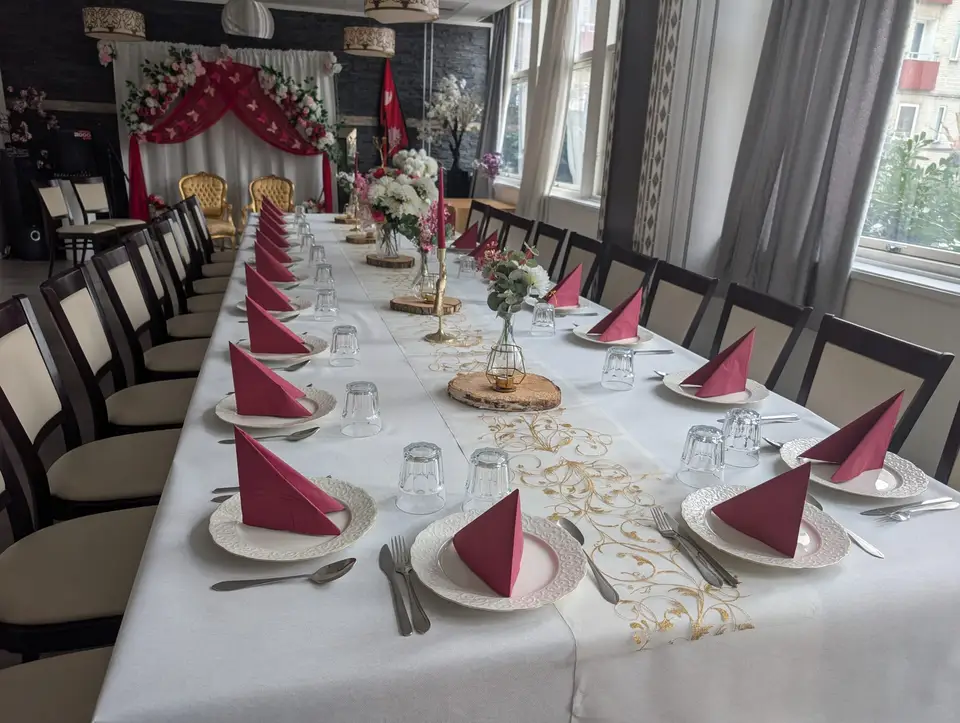
The room itself is one space for 30 to 120 guests, which keeps a wedding together rather than splitting it between a bar and a dining room. The hall fee covers decoration, the sound system, the projector, staff and the cleaning afterwards, and what is included is set out on our prices page.
If the city hall gives you a time this spring, come and see the room before you plan the afternoon around it. You can read how a wedding works in our hall, or simply book a visit and walk it with the ceremony time in your pocket.