
How many dishes should a party buffet have?
13 November 2026 · 5 min
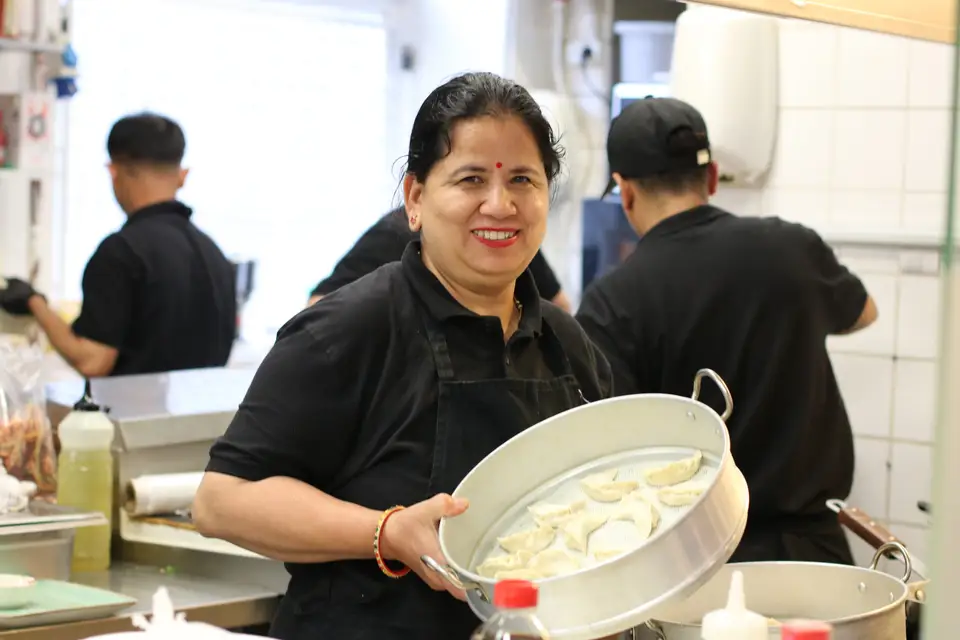
A buffet with twelve dishes on it is not twice as good as one with six. The guest still arrives at the counter with a single plate, that plate still holds what it holds, and the extra length mostly turns into more trays to keep hot and more food going back to the kitchen barely touched.
So the useful answer is a smaller number than most people expect: around five to seven dishes for the main service, plus something sweet if there is a cake or a dessert table later. What makes a line feel generous is not how long it is. It is whether every dish on it is doing a job that none of the others is doing.
Count jobs, not dishes
Walk along a buffet and ask what each tray is for. A line that works has one of each of these, and rarely needs two:
- something starchy that carries the rest of the plate
- something wet, so nothing on the plate is dry
- a vegetable dish with a character of its own, not a garnish
- one or two proteins, cooked by different methods
- something sharp and salty that cuts through the rest
- a bread or a side that guests can take or leave
Six jobs, which can be six dishes. Buffets go wrong when two or three trays apply for the same job: two mild creamy dishes, two plain rice dishes, three versions of potato. The line gets longer, the plate gets duller, and the people who come back for a second helping take less than they would have.
The dal bhat plate is the shortest model that works
Nepali home cooking settled this question a long time ago, and the answer fits on one plate. Dal bhat tarkari puts lentils, rice and a cooked vegetable in front of you at the same moment, not one after the other, and a second helping is assumed rather than offered.
Look at what that plate is doing. The rice carries. The dal keeps everything moist. The tarkari brings the vegetable forward as a dish rather than a decoration. Add one grilled meat, sekuwa for instance, charcoal grilled and marinated, from the eastern hills of Nepal, and a spoonful of achar at the edge, and five items have covered every job on the list with nothing repeated.
This is why the buffets our kitchen builds often look shorter than guests expect and feed better than they expect. A structure designed as a complete meal behaves differently from a collection of options, because the dishes hold each other up instead of competing for the same part of the plate. Our catering page sets out how each set menu is put together.
Why one sharp achar beats a third main dish
If your line has six dishes and you are tempted to add a seventh, the best thing to add is almost never another main.
Achar, the Nepali pickle, is the clearest case. It is sour, salty and sharp, it goes at the side of the plate rather than over the food, and one spoonful changes the taste of everything already on there. A single tray of it hands every guest a second version of the meal they just built for themselves. A third curry hands them a slightly different version of the one they already took.
Heat follows the same logic. It sits in one bowl at the side instead of being built into every dish on the counter, so nobody has to interview the buffet before filling a plate and nobody is stuck with a meal milder than they wanted.
What a line of six looks like in the hall
Our hall on Højdevej has one room and one buffet, set along the dark stone wall with the tables in front of it. That shapes the count as much as the menu does. A counter of that length holds a working line of five or six hot dishes with room to serve from both ends, and eighty people move past it steadily. Push it to eleven and the queue stops at every second tray while guests read the line, and the dishes at the far end go cold waiting for them.
Everything is cooked a few metres from the counter it is carried to, and that is the part that decides what a short line can do. Trays come out in batches across the whole service rather than being laid out once at the start and left to surrender their heat. Six dishes that arrive hot and are replaced three times make a better buffet than ten that went out at seven and stayed there. The hall seats 30 to 120 guests, so the same thinking has to work for a christening lunch of thirty five and a wedding of a hundred and ten.
When an extra dish does earn its place
There are four good reasons to lengthen a line, and variety for its own sake is not one of them.
- Guests who eat no meat. Any menu can be made fully vegetarian. Where only part of the room eats that way, give the vegetable dishes enough weight on the counter to be somebody's whole dinner rather than a polite side.
- Children. Children aged 5 to 12 pay half the menu price. They also eat narrowly, so one mild, plain, recognisable dish saves a parent a trip to the kitchen.
- An allergy you know about in advance. A separate dish with its own serving spoon is safer and calmer than a kitchen trying to adapt six.
- A long evening. A party running from six until midnight wants something later, not more at the start. That is a second short service rather than a longer first one.
Then stop. The length of the list is not what anyone will remember about the evening.
Tell us what the occasion is and the kitchen proposes the line, instead of handing you a catalogue to assemble yourself. Set menus are priced per person and start from 180 DKK per guest, with the composition chosen for the day. The prices page sets the menus beside what the hall fee already includes.
Send us the date, the headcount and whether anyone at the table eats differently from the rest, and come and see the room before you decide. We will happily walk you through what goes on the counter and why.
Prices are taken from our current price list on 22 November 2026. The full list is on the prices page.