
What is achar, the Nepali pickle?
9 September 2026 · 5 min
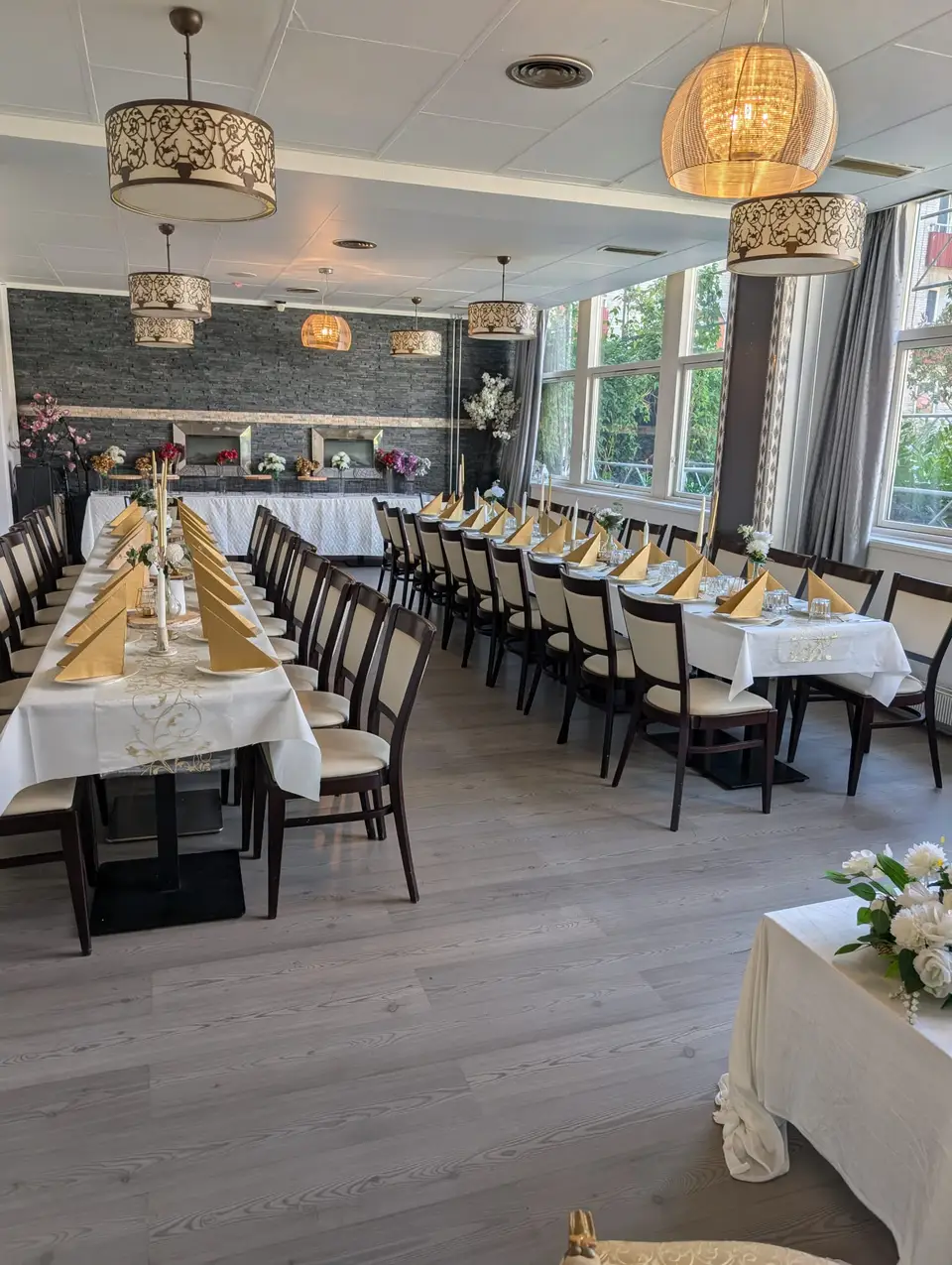
The smallest bowls on the buffet counter are the ones guests ask about first. They hold achar, and a spoonful of it changes a plate more than anything else standing on the line.
Achar is the pickle that Nepali food is eaten with. Sharp, usually sour, often the fiercest thing in front of you, and always set beside the food rather than stirred through it. That last part is not a technicality. It is the reason ninety people, some raised on chilli and some not, can eat from one counter in one room without anybody being handled separately.
What achar actually is
Achar is not a recipe. It is a family of them, and the members have little in common except the job they do.
At one end sits the fresh sort, ground on the day and eaten within a day or two. The bowl next to a plate of momo is the one most people in Copenhagen meet first: tomato cooked down and ground with toasted sesame, chilli, garlic and ginger until it is thick, sour and nutty. That is a pickle by intent rather than by age.
At the other end sits the keeping sort, salted and packed into mustard oil with turmeric, fenugreek and chilli, then left to mature into something you spoon out of a jar months later. Radish is common. So is lapsi, the Nepali hog plum, which has no real equivalent in a Danish larder.
What links them is not an ingredient. It is a proportion. Achar is the small, loud thing you take a little of, sitting next to the plain, filling thing you take a lot of.
It helps to say what it is not. It is not a dipping sauce, although it often gets used as one. It is not a sweet chutney. And it is not gundruk, the fermented leafy greens that appear on the same table, which carry no salt at all and are a dish in their own right rather than a seasoning.
Why the chilli is kept out of the pots
A Nepali curry is seasoned the whole way through. Turmeric, cumin, coriander seed, ginger, garlic and mustard oil go in early, and jimbu, a dried Himalayan allium, gives up its flavour only once it has been bloomed in hot fat. None of that is timid cooking.
Well seasoned is not the same as hot, though, and the tradition holds the two apart on purpose. The chilli mostly stays out of the pot and goes into the pickle instead, along with timur, the Nepali relative of Sichuan pepper, which is citrusy and sharp and tastes of nothing else on the table.
So the burn arrives as an object rather than as a property. It sits in a bowl with a spoon in it. You can take it or walk past it, and the dish you are eating is the same dish either way. We took the whole strength question apart in how hot Nepali food really is.
The sourness matters as much as the heat
The chilli gets the attention. The acidity is what the meal is actually built around.
Rice, lentils and a vegetable curry are soft, warm and filling, and they are meant to be eaten in quantity. On their own they flatten out after ten minutes, the way anything gentle does. A scrape of something sour at the edge of the plate resets the mouth, and the next forkful of rice tastes the way the first one did.
This is worth knowing if you do not eat chilli, because the usual instinct is to avoid the bowls altogether, and that throws away the wrong half. A mild achar is still tart, still salty, still doing the work. Ask for one without the heat rather than for none at all. The same logic runs through what is dal bhat, where the pickle is one of the parts the plate gets assembled from.
Why one counter can feed a room of 30 to 120
Our hall takes 30 to 120 guests, there is one room, and dinner goes out along a single counter against the dark stone wall. Nothing about that arrangement lets a kitchen cook two versions of the evening. What it does allow is one version, cooked to a strength the whole room can eat, with the decision moved to the end of the line.
In practice that means four small things:
- Two bowls, one mild and one hot, set well apart with a spoon in each.
- Both placed after the rice and the curries, so nobody has to choose before they have seen the food.
- A card saying which is which, in Danish and English, because guessing at a buffet is how a plate gets ruined.
- Children's plates go straight past them.
The social part is the real gain. A guest who cannot manage chilli never has to announce it at the counter, and a guest who grew up eating this food never has to accept a toned down version of it out of politeness to the rest of the room. Both walk the same route past the same dishes.
Asking for the achar you want at your own party
Tell us what the room looks like and the kitchen builds around it: a family where everybody eats hot food, a julefrokost where nobody does, or the usual mixture of the two with a table of children in the middle.
Our kitchen, Maiya Nepali Kitchen, is in this building, and for achar that counts for more than it does for anything else on the menu. Fresh achar is at its best on the day it is ground, so ours is made on the morning of your party, and mixing it at two strengths is a decision taken that morning instead of a compromise settled a week earlier somewhere else. The catering page sets out what the menus are built from, and the prices page sets the menus out per person, alongside what the hall fee already covers.
Tasting both bowls with a spoonful of rice is the only honest way to settle the strength. Book a visit to Højdevej 59 in 2300 København S, where parking on the site is free, or call us on +45 21 95 92 92.