Nwaran, the Nepali naming ceremony
4 November 2026 · 5 min
A Nepali baby is usually eleven days old at its own first party. That is sooner than most families here plan anything, and it shapes everything else about a nwaran: who can come, what hour it runs, and what gets served.
Nwaran is the naming ceremony. It marks the end of the seclusion that follows a birth, and it is the day a priest gives the child a name. Families in Copenhagen hold it at home where there is room. When there is not, with grandparents, aunts, uncles and the whole extended circle wanting to be in one place, they book a hall and put a lunch after it.
What actually happens on the day
A nwaran has two halves. The first is the ritual, led by a priest working from the exact time and place of the birth. From those he draws the child's horoscope and the birth star it falls under, and that star decides the syllable the name has to begin with. The name is not picked from a shortlist the parents argued over for months. It is read off the sky at the moment the child arrived, then written down and kept.
Around that sit the elements most guests recognise even if they have never attended one: water and a lit lamp, the washing of the baby, the mother rejoining the ordinary life of the household, and blessings from the elders in order of seniority. The maternal grandparents usually carry a visible part, arriving with clothes and gifts for the child.
The second half is the meal, and it is not the bit at the end that could be dropped. Feeding everyone who came is the social body of the ceremony, and in many families it is the larger half.
The eleventh day is the usual reckoning, though practice varies between communities, and the date is set against the lunar calendar rather than the office diary. So you enquire about a room with a date you were given, not one you chose. Say that when you ask. It changes how a venue reads a request for a Tuesday in three weeks.
The ritual name and the name on the Danish record
This is where families raising children here meet something their own parents never faced.
The name the priest gives is a ritual name. Many families keep it for ceremonial use, inside the horoscope and in the rites that come later, while using a different everyday name at home, at the daycare and on the passport. Both are genuinely the child's, and nothing requires them to match.
Denmark wants its own answer, separately, and inside six months. The naming has to be registered before the child is six months old, and without a christening that happens on borger.dk. A nwaran registers nothing with the Danish authorities, so the form is still waiting afterwards. We went through that deadline, and how it quietly sets the date of the family lunch, in when does a child have to be named in Denmark.
Why the day works better in a hall than in a flat
The day belongs to a baby eleven days old and a mother eleven days past giving birth. Both are better served by something bright, short and in the middle of the day than by an evening that drifts.
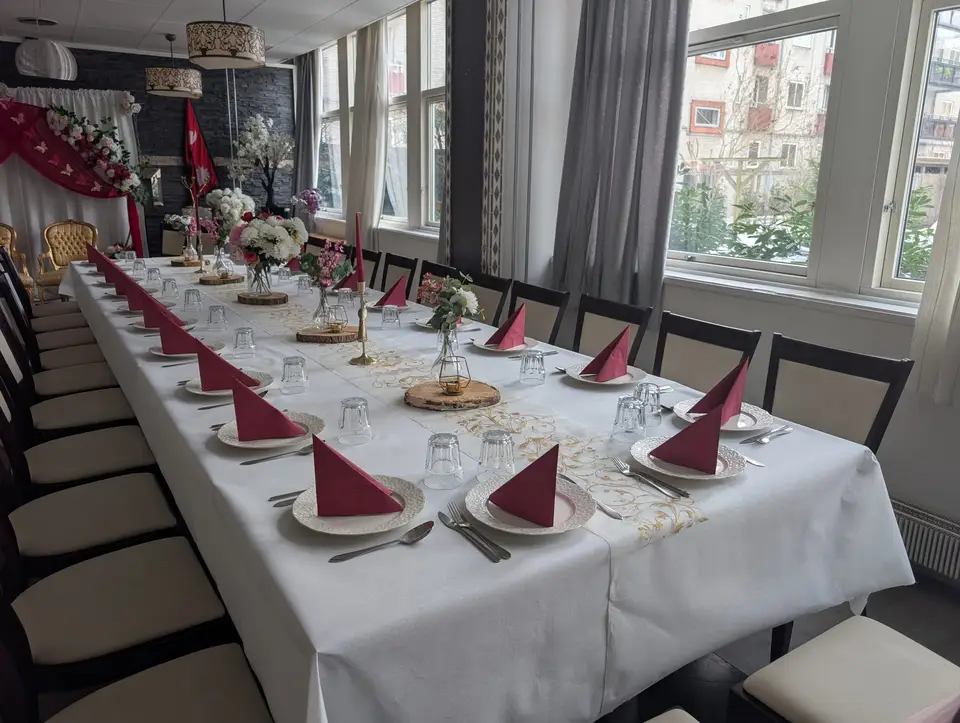
A hall helps mostly by removing work. Nobody in that household should be cooking for forty people or washing up afterwards. Our hall at Højdevej 59 is one room for 30 to 120 guests, so the ceremony and the lunch share a space without anyone moving, and the family can come early and set up the ritual corner properly rather than improvise on a coffee table.
Two practical things matter more than usual here. Parking is free on our own site, which for grandparents arriving with a car full of gifts and a newborn in a seat is worth more than it sounds. And Maiya Nepali Kitchen cooks in the same building, so a tray that empties while the blessings are still going round comes back full within the minute.
If the circle is small, book the room anyway, and know how it is charged. Thirty guests is the floor the hall fee is billed against. Menus and drinks are counted per head who walks in.
What to put on the table
Sel roti belongs here. The batter is soaked rice, sweetened, and the cook pipes it by hand into hot oil as a ring. It is celebration food, and a stack of it says what the day is before anyone explains. We wrote about how it is made in what is sel roti.
Beyond that, a nwaran lunch is usually a proper Nepali plate rather than finger food: rice, dal, a tarkari, a meat dish or a second vegetable one, greens, and achar on the side. Newar families often want samay baji alongside, the beaten rice platter with black soybeans, bara, choila and ginger, which we set out dish by dish in bara, chatamari and samay baji.
Two notes for mixed guest lists, which most of these now are. Any set menu can be made fully vegetarian from the start, which matters when part of the family is not eating meat that week. And the chilli sits in the achar beside the rice rather than through every pot, so Danish neighbours and Nepali uncles eat one lunch at two strengths.
What to ask a venue before you commit
- Can the ritual be performed indoors as you intend it? If your priest expects a lamp or any open flame, ask that first, of any venue, and get the answer in writing before you book. It is the one detail that cannot be sorted out on the morning.
- Is a weekday daytime booking possible? Your date comes from the calendar, not from the weekend.
- Is there a quiet corner for feeding and changing? Someone needs one within the hour.
- Who sets up and who clears away? Our hall fee covers decoration, sound, staff and cleaning, so the family does none of it.
The room we set for christenings and naming lunches is on the christening venue page, and what sits inside each menu is on the prices page. If your date is already fixed, send it to us early and book a visit to see the room first.