
A programme for a work anniversary reception
26 August 2026 · 5 min
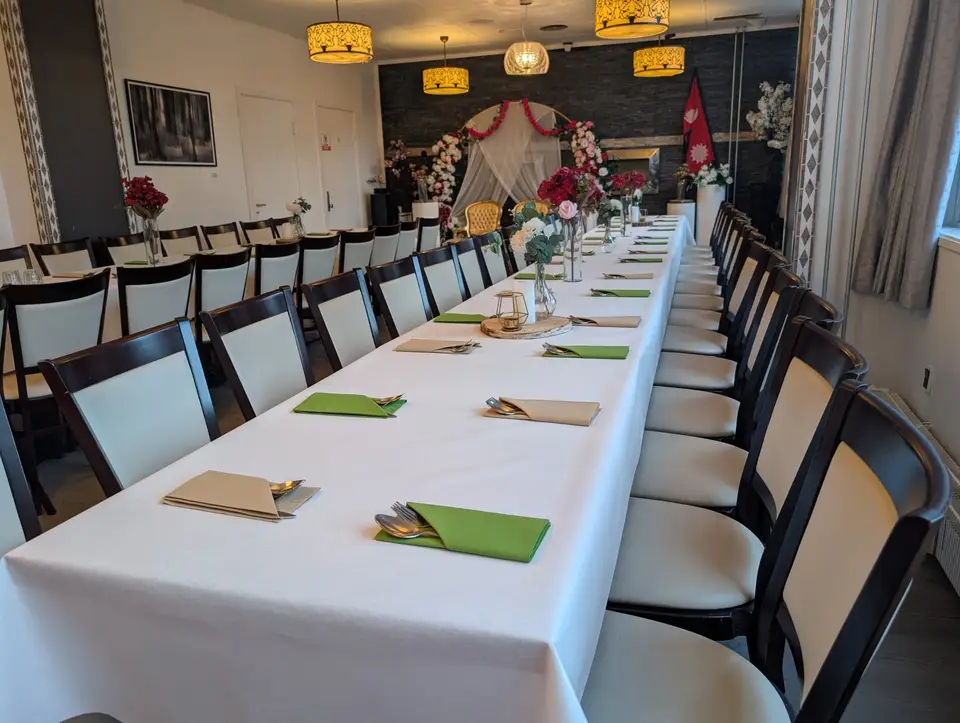
The date gets announced in an email, the room gets booked, and then nobody decides what actually happens between four and six o'clock. That is how most work anniversary receptions are planned, and it is why so many of them sag in the middle. The colleague being celebrated stands near the door for two hours, the speeches happen whenever someone feels brave, and the food goes out at a moment nobody chose.
A reception does not need a script. It needs a running order on one sheet of paper, held by somebody who is not the guest of honour. Here is the one we would suggest for a two hour jubilee.
Why a floating guest count is the real problem to solve
A jubilæum is the one celebration where you cannot know how many people are in the room at once. Colleagues come down in shifts because someone has to answer the phone. A customer drops in for twenty minutes on the way elsewhere. The family arrives late, straight from school.
That is not a flaw. It is the format working as intended, and the programme has to be built for it. Two hours is the right length precisely because it absorbs the drift: a guest who arrives half an hour late still catches the speeches, and nobody has to manufacture conversation for a third hour.
It also shapes what you book. Our hall on Højdevej 59 is a single room for 30 to 120 guests, which for a reception matters more than it does for a dinner. Anyone who walks in can see the whole party from the doorway, find the person they came for, and leave again without an awkward exit through three smaller rooms. On the billing side, the hall fee has a floor of thirty people, and everything eaten or drunk is counted for those who actually came. When a fifth of the invitation list sends apologies on the morning, that distinction is worth reading on the pricing page before you book.
The first twenty minutes belong to the door
Put nothing at all in the programme before the twenty minute mark. Nothing.
Those minutes are coats, first drinks, and the guest of honour shaking roughly forty hands. Schedule a speech for the minute the invitation names as the start and you deliver it to two thirds of a room while the rest are still parking. Free parking on site tightens the arrival rather than spreading it over streets away, but people are still people and they are still late.
One piece of layout matters more than anything else here: put the drinks table well away from the entrance. If the first thing guests reach is a glass, the queue to greet the jubilarian and the queue for a drink become one queue, and the doorway jams for the whole first half hour.
One speech block, then the gift
Every speech goes in one block, roughly forty minutes in. By then the room is as full as it is going to get, nobody has started to leave, and the glasses are already charged.
Three speakers is the ceiling, agreed in advance rather than discovered on the day. A manager, the colleague who has worked alongside them longest, and the jubilarian's own thank you, which should be the shortest of the three. One person introduces all three and closes the block, so there is never a silence where the room wonders whether it is over.
Turn the music off for the block rather than down, because eighty people will not stop talking for background music that merely got quieter. The sound system and the projector are part of the hall fee here, along with the decoration, so a slideshow of photographs from twenty five years of the department costs nothing extra to add.
The gift is handed over at the end of the block, while the room is already facing the same way. Any later and it happens sideways in a corner, with half the guests missing it and the photographer catching the back of a head.
Food you can eat with one hand
The test for reception food is simple. Can a guest eat it standing up, holding a glass, without a table?
Momo pass that test better than anything else our kitchen makes. They are steamed dumplings in a thin wheat wrapper with achar on the side, and people were eating them out of hand long before anyone thought of putting them on a buffet. Sekuwa works the same way from a platter: meat marinated and grilled over charcoal, a speciality of the eastern hills. Choila, the Newar dish of charred meat tossed with mustard oil, ginger, garlic, chilli and timur, eats well in a small portion.
Save dal bhat tarkari for a seated dinner. Lentils, rice and a vegetable curry arriving together, refills included, is a wonderful thing that genuinely deserves a chair.
Two questions always come up, so answer them on the invitation. Is it spicy: most of the heat lives in the achar on the side, not cooked into the dish, so each guest sets their own level. And is there something for everyone: any menu can be made fully vegetarian, which is far easier than counting preferences in advance. The catering side explains how a buffet works.
Our kitchen sits inside this building, so the buffet is topped up across the two hours instead of arriving once and cooling. The guest who walks in at the ninety minute mark gets hot food, not the end of it.
A two hour running order you can copy
Written for a 16:00 start. Shift every line if your start moves.
- 16:00 Doors. Music low, drinks table away from the entrance.
- 16:20 The room is full enough. Deliberately do nothing.
- 16:40 Speech block. Three speakers, one introducer, music off.
- 17:00 The gift, the photograph, the applause.
- 17:05 Buffet opens. People move naturally after clapping.
- 17:40 Coffee and cake. The room begins to thin.
- 18:00 Close by thanking the room, and say plainly where the evening carries on if it does.
Seven lines is genuinely all the planning a jubilee reception needs. It works because only two moments are fixed, the speeches and the buffet, and the rest is room to talk.
If you are marking a jubilee this year, see how the hall handles an anniversary or a reception, and then book a visit so you can walk the route from the door to the drinks table first.