
When do you send confirmation invitations?
25 September 2026 · 5 min
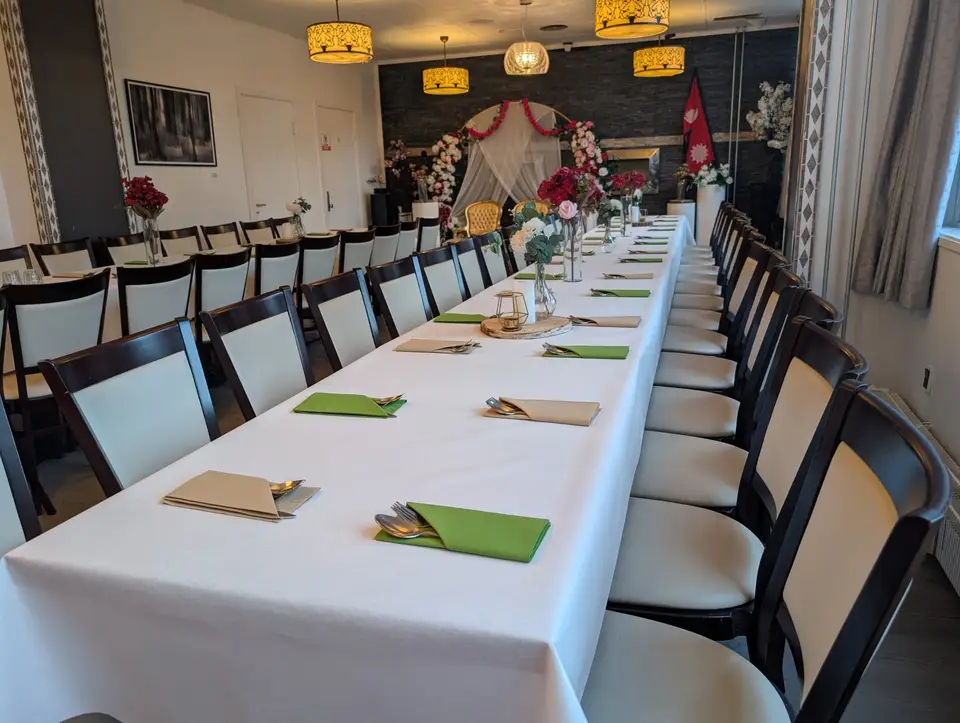
A confirmation invitation looks like the first job on the list. It is one of the last. The card commits you to a date, an address, a start time and a headcount, and once it has gone out to the family, none of those four can move quietly again.
So the useful question is not when to send it. It is what has to be true before you can.
Nothing goes on the card until three things are settled
Three facts have to be fixed, and they fall in this order.
The church is first. The parish sets the date and the hour of the service, and the whole day hangs off the moment the family walks back out.
The room is second. You cannot print an address you have not booked, and a spring Saturday is not something to assume. We have written separately about when to ring a venue about a confirmation, and the short version is that every family in the year group hears the parish date in the same week and rings the same halls that afternoon.
The hours are third, and this is the one that gets skipped. Ask your venue in writing when you can come in to decorate, when the food is served, and when the room has to be handed back. A guest reading your invitation is deciding whether this is an afternoon with coffee and cake or an evening that runs properly late, and the answer changes what they wear, whether they drive and whether they bring the youngest.
Only then does the card have anything true to say.
Count backwards from the church date
Four fixed points, working backwards from the service.
- The week the parish publishes the date. Tell the people who have to travel, book leave or arrange a dog sitter. Two lines in a message is enough. This is a warning, not the invitation itself.
- Once the room is booked and the hours are in writing. Now send the real invitation. For a spring confirmation that means getting it out in the winter, while the year is still empty enough for people to say yes without checking three other things.
- A reply deadline about a month before the day. Not a week. The reason is in the next section.
- A few days between your deadline and the number you hand the venue. You will spend them chasing the four people everyone spends them chasing.
An autumn confirmation, typically mid to late September, shifts the whole sequence into the summer, which is exactly when half your guest list is away and not reading post. Send before the holidays rather than into them.
What the invitation has to say, and what can wait
Guests do not need your table plan. They need to be able to answer yes and then arrive at the right place in the right clothes.
- The church, and what time the service starts.
- Where the party is, and what time it begins. If there is a gap between the two, say what happens in it, even if the answer is that people go home and change.
- Roughly when the day ends, so the guests who are driving home to Jutland can plan.
- Who is invited. Whether the invitation covers partners, and whether younger brothers and sisters are welcome at the table.
- How to reply, to one named person, and by when.
- One line asking about allergies and anything that cannot be eaten.
- How to get there, and where to leave the car.
That last point is easier here than most hosts expect. The hall is at Højdevej 59 in 2300 København S, and parking on site is free, which few Copenhagen addresses can put in an invitation. Guests who would rather not drive have a bus stop roughly two minutes from the door and three metro stations within walking distance. Our post on where guests leave the car has the rest, and one line borrowed from there saves a dozen phone calls.
The reply deadline belongs to the kitchen, not to you
A reply deadline feels like an administrative nicety. It is a production date.
The food for your party is cooked a few metres from the table it is served at, by the same people who carry it in. That buys a later adjustment than most hosts are used to being offered. It does not abolish the deadline.
Menus are costed and portioned per head. A child between 5 and 12 counts as half a menu. A fully vegetarian version is a plan rather than an improvisation on the night. The hall is booked against a guest number with a minimum of 30, so your figure also decides what the room costs. A count that arrives late arrives after the shopping has been done.
So do not collect a yes. Collect four things from every address: how many adults, how many children in that 5 to 12 band, who cannot eat what, and a phone number. Our guide to handling replies and late cancellations covers the chasing, and the shape of what you are paying for is set out on our prices page rather than guessed at across a kitchen table.
When the whole year group shares one Saturday
Your child is confirmed alongside classmates, and every one of those families is hosting a party on the same afternoon in the same part of town. Some of your guests will be holding two invitations for one date, choosing between them or splitting the day in half.
Two consequences for the card in your hand. Send earlier than feels necessary, because the first invitation to land is the one that gets the yes. And be specific about your hours: a guest with a lunch at eleven and your party at four can do both cheerfully if you have told them when yours ends.
Send it once the room is real
The order is worth repeating, because it is the whole answer: church, room, hours, then invitation. Everything else is stationery.
If the room is still the missing piece, stand in it before you print anything. You can book a visit, walk the length of the table and count the seats, and our page for confirmations on Amager has the practical detail while you decide. Bring the church date and we will tell you honestly whether it is still free.