
Alternative julefrokost menu ideas for year seven
18 September 2026 · 5 min
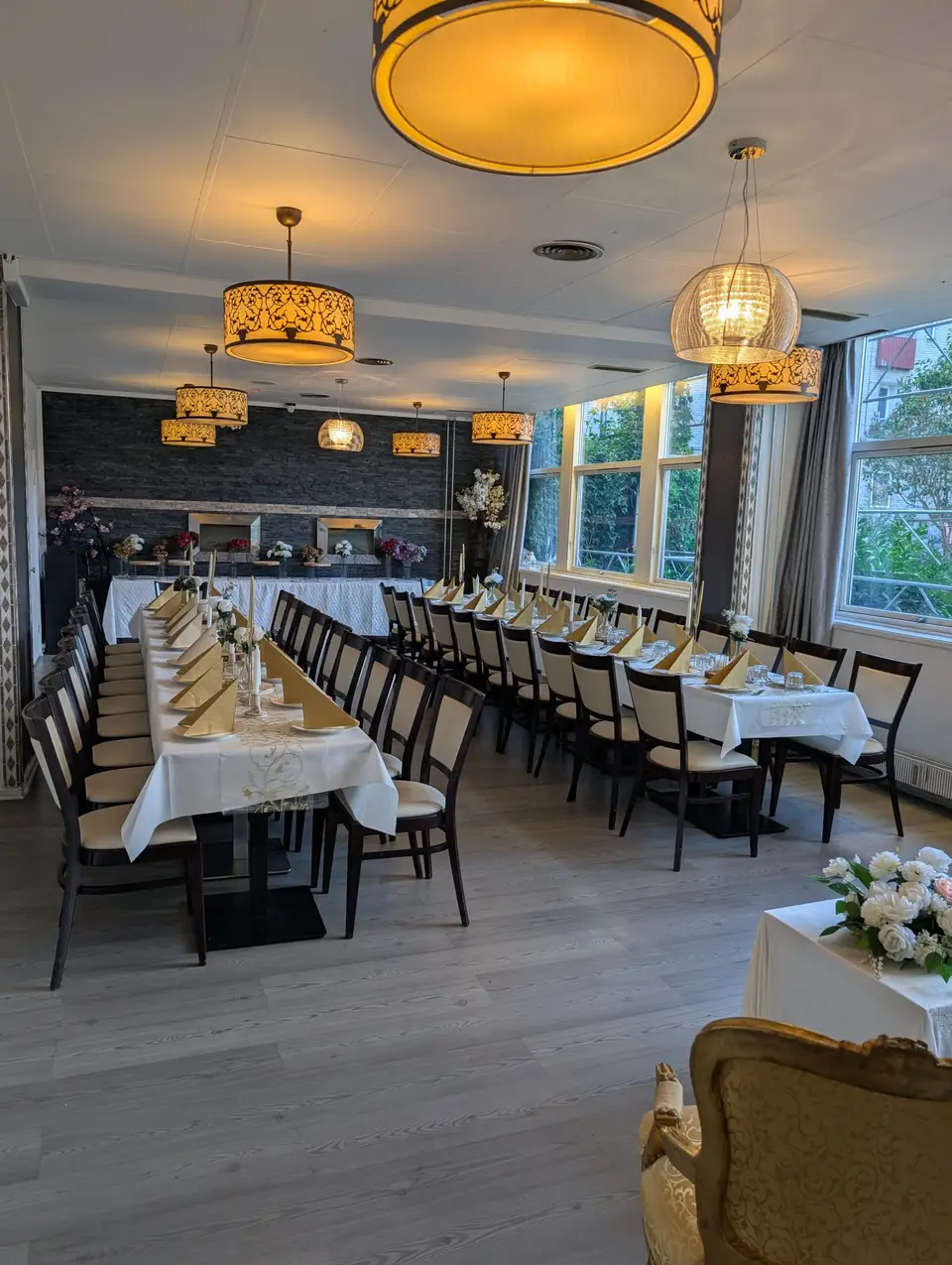
Somebody in every Danish workplace owns the julefrokost. They booked the room last year, and the year before, and by now they could order the sild, the frikadeller and the ris a la mande from memory. That is not a complaint about the food. It is what happens when a good tradition is run six or seven times for roughly the same forty people.
So when a colleague asks for something different this year, they are almost never asking you to cancel Christmas. They want one part of the afternoon changed, and it is usually the part on the plate.
What people actually mean when they ask for an alternative
Ask the office openly and the answers come back in a narrow set. Something warm, because a cold table is a lot of rye bread in the darkest month of the year. Something a vegetarian can build a whole plate from instead of picking around. Something worth talking about, since at a julefrokost the food is half the conversation. And a shorter queue, because nothing flattens an afternoon faster than forty people queueing twice.
Notice what nobody asks for. Not a different date, not a shorter afternoon, not a seating plan that splits the department. The tradition is doing its job. The menu has simply stopped surprising anyone.
Keep the three things that make it a julefrokost
A julefrokost is not simply a dinner that happens in December. Three things make it what it is, and none of them is a dish.
It is long. It begins in the afternoon and gives people permission to stay put for hours.
It arrives slowly, in rounds, with gaps for a speech, a song and a change of seat.
It is one table, or two facing each other, with everybody in the same room.
Hold on to those three and you can change every dish without anyone feeling robbed of their Christmas. Let one go and the best cooking in Copenhagen will not rescue the afternoon. If the sequence is what you want to protect, the traditional running order is worth reading first, since it is what most alternatives break by accident.
Why a warm buffet reads better in December
The cold table is a clever piece of engineering for a meal that has to last four hours. It also asks your guests to eat cold food in a month when they arrived in coats and it was already dark before they sat down.
Going warm changes the feel of the room more than it changes the logistics. Trays come out, steam rises, and the afternoon gains a pulse: something happens, then it stops, then it happens again. Our kitchen is on the premises, a few metres from the hall, which matters most at exactly this point. Warm dishes reach the table while they are still worth eating.
Two practical notes if you go this way. Release the buffet in waves instead of opening it once, so the queue is never the whole room at once. And agree in advance roughly when the heaviest dishes should land, since that is the only part of the day that has to run to a clock.
Momo as the round that opens the table
Momo are steamed dumplings in a thin wheat wrapper, served with achar, and at a julefrokost they quietly do the job the herring round does.
One momo is a single mouthful. A tray lands, gets passed along, empties, and another arrives a few minutes later. That rhythm is the point of a first round: small portions, no hurry, and a reason to stay in your chair and talk to whoever is beside you. Fillings are usually chicken, goat or vegetable. Ask for jhol momo and a thin spiced broth is poured over them once they are steamed, which in a dark December room is the version people remember.
It also settles the hardest question an organiser faces, which is finding one opening dish that forty different colleagues will all genuinely eat. Our catering page shows how the set menus and the custom ones are put together.
The vegetarian line, and how spicy any of it is
Most workplaces have someone who has eaten bread and remoulade at six julefrokoster in a row while the rest of the table ate pork. Any menu can be made fully vegetarian, and that deserves saying plainly. Not a separate plate carried out late, but the same buffet, built so a vegetarian colleague eats what everybody else eats. Dal bhat tarkari is lentil soup, rice and vegetable curry on one plate, with refills taken for granted. Vegetable momo. Gundruk, fermented leafy greens with no salt in them at all.
The second question always follows, so answer it first. Most of the heat lives in the achar beside the plate rather than in the cooking. Take a spoonful of it, or take none, and what is underneath tastes the same either way.
How to put it to the colleagues who like it as it is
Do not open this as a referendum on tradition. Bring two menus to the meeting and let people choose between them.
- Offer the hybrid first: Danish cold rounds to start, a warm Nepali table in the middle, ris a la mande at the end.
- Collect the vegetarian count by name rather than as a number, and the allergies the same way.
- Decide who announces each round, you or our staff.
- Leave the date and the start time exactly where they have always been. The year you change the menu is not the year to also move the party to a Thursday.
The hall stands on Højdevej 59, in 2300 København S on Amager. Parking on the site is free, and the room seats 30 to 120 guests. The julefrokost page lists what is included in a December booking, and the prices page explains how the hall fee and the per person menus work.
Give us a date and rough numbers, and we will draft a menu you can take back to the office. Book a visit if you want to see the room first, or ring +45 21 95 92 92.