
How much food should you count per person for a buffet?
28 August 2026 · 5 min
Ask a caterer how much food to count per person and the answer usually comes back as a weight. It sounds reassuringly exact. It is also close to useless when you are standing in a hall with ninety guests, because the same quantity of food vanishes in an hour at an evening party and stretches across three at a christening lunch.
Quantity is not really a weight problem. A buffet runs short for three reasons, and none of them is a mistaken portion size: the guest count slipped after the invitations went out, the serving window stretched, or the food went out once and was never touched again. So here is how we count it instead.
Count servings and components, not grams
The unit that plans a buffet well is a full plate, not a gram figure. Every guest takes one plate per serving, and a good share of the room comes back for a second, smaller one. That is the whole arithmetic. What changes it is how many servings the party has, and how many things sit on the counter for each of them.
Component count matters more than people expect. A buffet of three dishes means everyone takes a proper helping of all three. A buffet of eight means most guests take a spoonful of each, and the total per head barely moves while the plate looks twice as generous. Variety is cheaper than volume.
This is why our set menus are built and priced per person rather than by weight. You give us the headcount and the shape of the day, and the kitchen scales the quantity behind the scenes. The catering page sets out what each menu puts on the counter.
The five things that genuinely change the amount
- How long the buffet stays open. A two hour reception and a party that runs from six until midnight are not the same order, even for the same guests. Time at the table, not appetite, is what empties a tray.
- Seated or standing. Guests with a chair and a full place setting eat a meal. Guests on their feet with a glass in one hand graze in small amounts and return more often, which looks like more traffic and adds up to less food.
- The time of day. A midday lunch is one service and coffee. An evening that opens at six wants the main service and then something later, once people have danced.
- Who is actually at the table. Children aged 5 to 12 pay half the menu price here, and a room with fifteen children in it eats noticeably less than the headcount suggests.
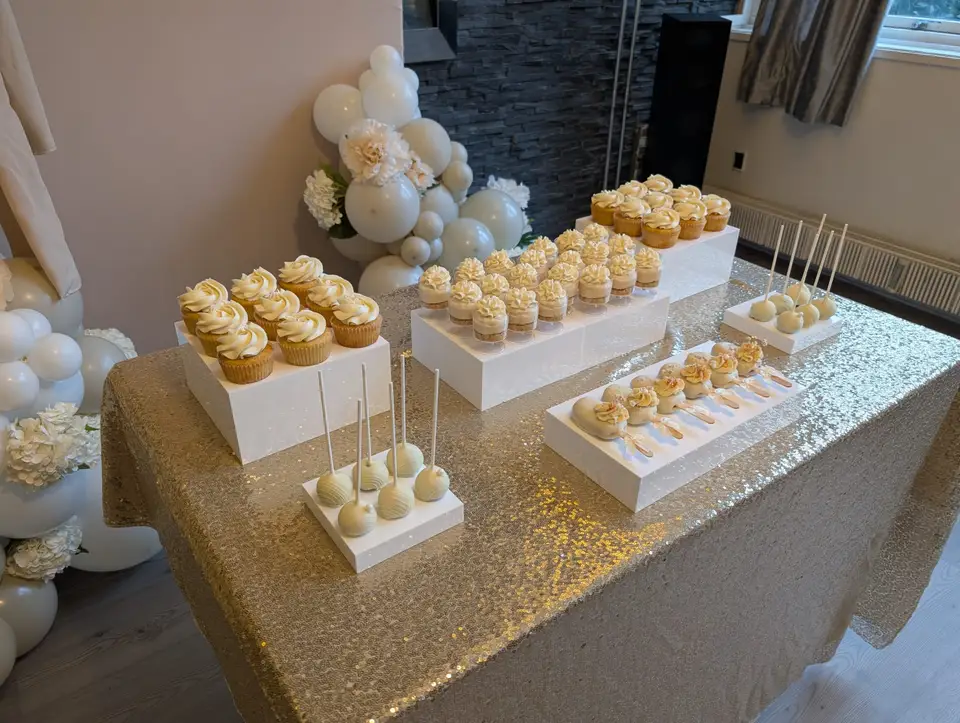
- Whether there is a sweet table at the end. Cake is counted in pieces rather than portions, because guests take two or three small ones where they would have taken a single slice. A dessert table always looks emptier than it is.
Why a Nepali buffet counts differently from a Danish one
On a Danish buffet the meat is the centre of the plate and everything else is built around it. Our kitchen works the other way round, and it changes the sum.
Dal bhat tarkari sets the pattern: rice, a lentil soup and a vegetable curry reaching the plate together, with refills treated as normal rather than as a favour. Rice and dal carry the meal, which means the grilled dishes beside them are components rather than the anchor. Momo, the steamed dumplings, and sekuwa, meat marinated and cooked over charcoal in the style of the eastern hills, go a long way when they are not being asked to fill the plate on their own.
Two things follow. Most of the heat lives in the achar served alongside instead of being cooked through every dish, so guests set their own level at the counter and nobody avoids a tray. And any menu can be made fully vegetarian, so a vegetarian guest is not eating around the edges of a buffet built for someone else.
Counting your guests is where it usually goes wrong
Nearly every shortfall we see starts here rather than in the kitchen.
Count the people who will eat, not the invitations you sent. Then add the ones families reliably forget: the photographer, the DJ or the musicians, and whoever is helping on the day. They are working through the meal and they are hungry at the end of it.
Our hall seats 30 to 120 guests and carries a 30-guest minimum on the hall fee. Food and drink are billed on real attendance rather than on that floor, so a party of twenty six is welcome and the kitchen cooks for twenty six. The shape of all of that sits on the prices page, where the figures come straight from the system the owner keeps current.
Running short is a service problem more than an ordering one
Most buffets that fail do so at the ninety minute mark, when the trays are half empty, everything has cooled, and the guests who arrived late are looking at the remains of somebody else's dinner.
The fix is not a bigger order. It is holding part of the quantity back and sending it out in waves, so the counter looks full at the end of the service as well as at the start. Our kitchen is a few metres from the counter, and the same team cooks and serves, so trays get replaced hot as they empty. A caterer who delivers everything at once has to build that insurance into the order instead, and you pay for it whether it gets eaten or not.
What to send us for a real answer
Five lines is enough: the date and the hours, the headcount split into adults and children between 5 and 12, whether guests are seated or standing, whether there is coffee and cake afterwards, and how many need a fully vegetarian plate.
If you have not settled on a buffet at all yet, our post on choosing between a buffet and a served dinner is the one to read first. Otherwise write to info@maiya.dk, ring +45 21 95 92 92, or book a visit to Højdevej 59 and stand where the counter goes before you decide anything.