
How to seat two families who have never met
4 September 2026 · 5 min
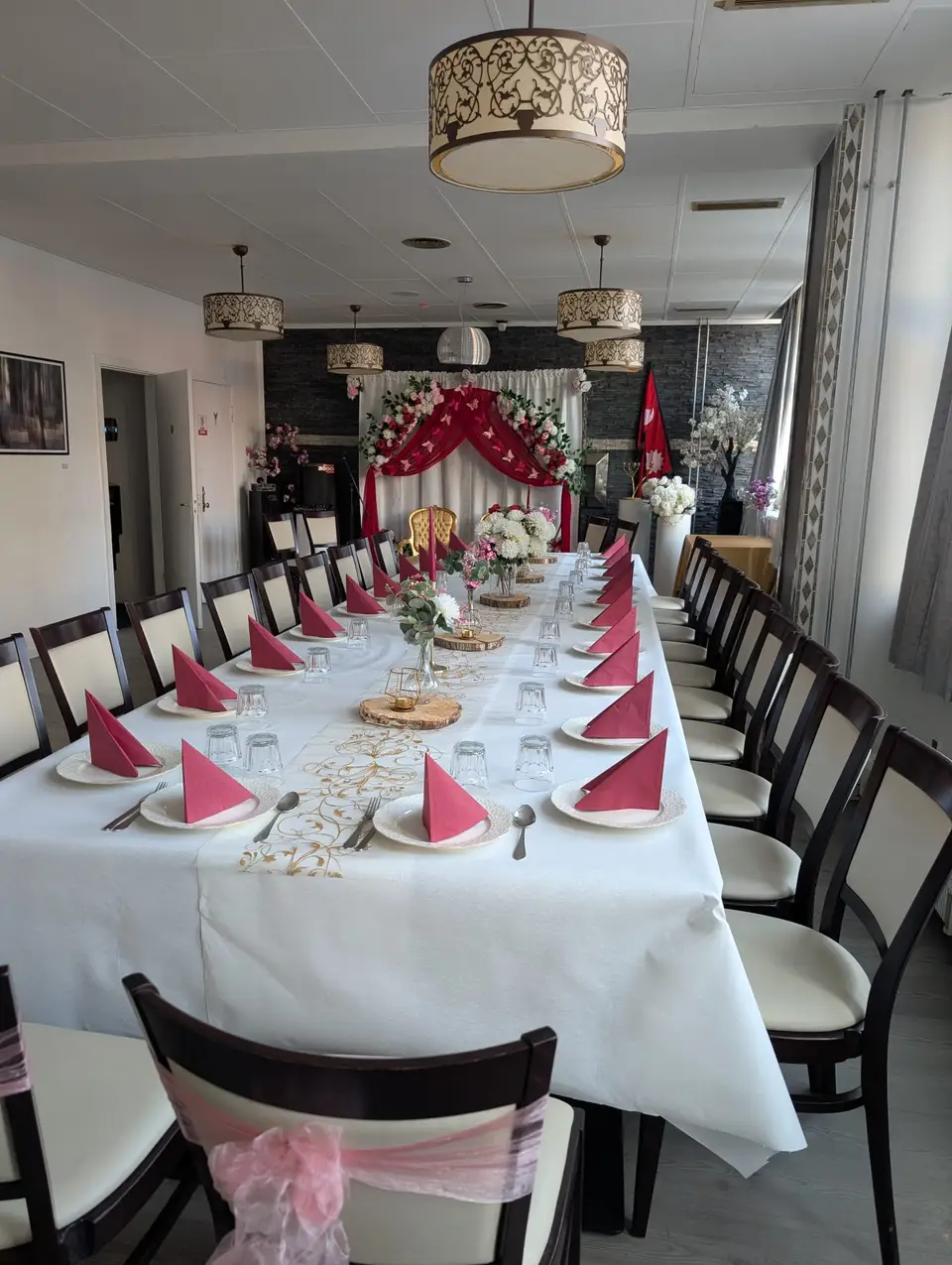
The seating plan is the one part of the day where you decide, in advance and by name, who each guest spends the next five hours beside. The music is offered to the room at large. The chairs are assigned personally.
That matters most when the two families have barely met. Most Danish seating advice answers a different question. It sets out the rank order: who sits nearest the couple, which parents take which side, where the godparents and closest friends land. That order is worth knowing, and it settles about a dozen chairs. It says nothing about the other seventy, which at a wedding of two families meeting for the first time is the whole evening.
Rank order settles a dozen chairs, mixing settles the rest
Follow the traditional order and the top table comes out right. Then most couples do the natural thing with everyone else and work outward in blocks: one family down this run, the other down that one, friends at the far end.
The result is two parties in one room. Each half is comfortable, nobody is rude to anybody, and the two sides talk to the people they arrived with. The seam holds all evening, it shows in the photographs, and it is what we most often hear families regret.
So treat the mixing as the real design problem. Satisfy the rank order in five minutes, then spend the time you have on the part that decides how the night feels.
Split couples, not families
Two rules govern most seating plans: keep every couple together, and keep every family block together. Past about forty guests those rules start to fight, and one has to give. Give up the first.
A couple arrived together and will drive home together, with the welcome drink, the speeches, the coffee and the dancing in each other's company. Two hours of dinner apart costs them almost nothing. Seat them diagonally opposite, or two or three chairs along on the same side, so they can catch each other's eye without sharing a conversation. Each of them then sits among the other family, and the seam runs across a table instead of down the middle of the room.
A family block broken the same way is a different matter, because the guest you move has nobody left within reach. Move the couples, leave the blocks whole, and join the blocks at their edges.
Some couples should stay together anyway. Decide which ones deliberately rather than by default:
- guests travelling from abroad who know nobody else in the room
- a parent with a baby or a small child at the table
- anyone whose neighbours would leave them without a shared language
- a guest who has recently been bereaved, or who is unwell
That is usually four or five pairs out of forty.
Bridge seats, and who fills them
Wherever one family meets the other along a table, put a named person in that chair, not a hopeful gap. These are your bridge seats, and they are the only part of the plan worth agonising over.
Pick the guests who ask questions rather than answer them. Pick the overlaps you already know about: two in the same trade, two with children the same age, two who met outside the church. Pick anyone who has already spoken to both sides.
Down a long run, a guest really reaches their two neighbours and the few faces opposite, so one bridge guest covers about five people. That is the arithmetic behind how many you need. Thirty seats joined once in the middle need one. The same thirty alternated in blocks of six need four or five.
Write those names on the plan before anything else and build outward from each one. If you cannot find enough of them, the honest fix is not a cleverer plan. It is getting the two families into one room once before the day, at the engagement party or after the rehearsal.
Where the bilingual guests sit
When one family speaks Danish and the other does not, language outranks family in the plan, and two things follow.
Do not gather every English speaker at one table. It looks kind on paper and builds exactly the wall you were trying to avoid, and nobody quite gets round to walking over to it. Spread them along the tables in small groups instead.
Then give each of those groups a genuinely bilingual guest within that five-seat reach, so nobody sits through dinner without a route into the conversation. Cousins in their twenties are usually the best supply. Ask them in advance: a guest who has been asked does it gladly, and one who has not simply talks to their neighbour. The same people carry the speeches, and speeches when not everyone speaks Danish covers what happens at the microphone.
What one hall on Højdevej does to the plan
There is a single hall here at Højdevej 59, 2300 København S. One room, 30 to 120 guests, and nowhere for either family to drift off to. That sounds like a constraint and it works in your favour: the mixing has to happen at the tables, and everybody hears the same speeches from the same seats.
We usually lay the room as long runs, which is what the advice above is written for. Long tables or rounds sets out what changes if you want circles, and the short version is that rounds mix better and seat fewer people.
A buffet is served from the counter at the far end of the room, so the queue forms along the length of the hall and stands the two families in one line, twice, with nobody planning it. A plated dinner leaves all of the mixing to your plan. Our wedding page shows how each is usually run.
Write it late, then walk the room
Draw the plan once the replies are in, and again in the wedding week, because the late changes are what break it. Print it large enough to read at a distance and check that every bridge seat survived.
Then come and pace it out. Book a visit and bring the list. Parking on the site is free, so bring both sets of parents and let them stand at either end of a table first. The number is +45 21 95 92 92, the inbox is info@maiya.dk, and our prices page covers what the hall fee already includes.