
A wedding checklist ordered by what depends on what
26 September 2026 · 5 min
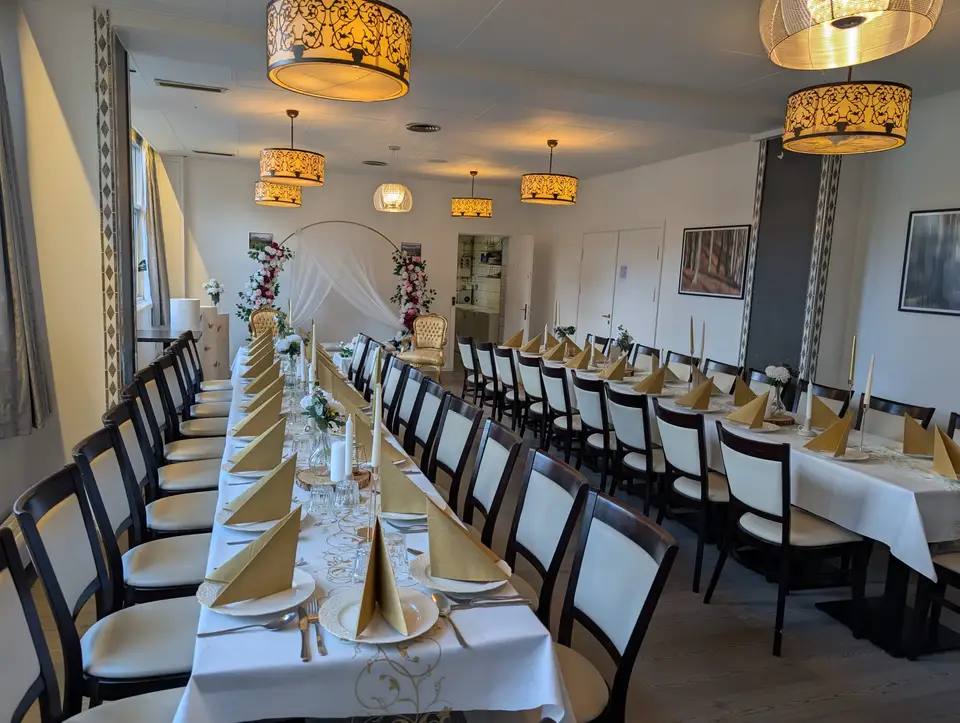
Almost every wedding checklist you can download is sorted by category. Venue, food, flowers, music, rings, paperwork. It reads well and stalls on the first afternoon you use it, because a category list tells you what exists and nothing about what is blocked.
Flowers sit under their own heading as though you could order them in January. No florist can quote properly without a room, a table shape, a season and a rough number of tables to dress. So the line stays open, you feel behind, and the genuinely urgent thing that week was something else.
Sort the same list by dependency and it stops being a wall and becomes a route.
Ask three questions of every line
Before a task earns a place on your list, answer these.
- What has to be true before this can be decided at all?
- What actually breaks if it is left late? A late florist is an inconvenience. A late room is a different wedding.
- Who is waiting on this answer? Your caterer, your photographer and your parents are all downstream of decisions you have not made.
Most lines on a category list fail the first question.
The four decisions nothing else can start without
Date, ceremony, headcount, room. Everything else in the wedding is downstream of these four, and they resolve roughly in that order, though the middle two argue with each other.
The date comes first because it is the only line that constrains every other supplier at once. Denmark marries in August. It has been the most popular wedding month since 1995, with June second, which means an August Saturday is being chosen by a great many couples in the same few months that you are choosing it. A date outside that window buys you choice on nearly every other line.
The ceremony is second, and it sets the clock. The parish or the town hall fixes the hour, and the reception is then built both backwards and forwards from that hour: how long the photographs take, when guests can be fed, how much of the evening is left afterwards.
The headcount is third, and at this stage it is a number, not a list of names. Sixty or a hundred and ten changes the room, the table layout, the food and the bar. Our note on how many guests actually come to a wedding is about the gap between the list you write and the people who turn up, which is the figure you should plan the room around.
The room is fourth, and in practice it gets booked last when it should not. Our hall on Højdevej seats 30 to 120 guests, so the number you settled in step three is also the answer to whether a room works. The hall fee is charged per person with a 30-guest minimum, and menu and drinks are charged for the guests who really come. The wedding page covers the room itself, and we have written separately on when to ring a venue about a wedding date.
What only becomes possible once those four are fixed
With a date, an hour, a number and an address, a surprising amount unlocks in a single afternoon.
Invitations can be printed, because all four facts are on the card. The caterer can quote, because a menu priced per head needs a headcount to mean anything. The florist prices a table run instead of guessing. The photographer knows how much daylight is left. The seating plan can begin, because you know whether you are working with long tables or rounds.
Food deserves a paragraph of its own here, because it is where the venue decision keeps paying. Maiya Nepali Kitchen occupies the same building, so one team cooks your dinner and carries it to the table, and a change of plan on the day reaches them through a door rather than over a phone. Every menu is costed per head, a completely vegetarian version of any of them is available, and there is a reduced rate for children between five and twelve. The figures sit on the prices page, read from the owner's own system rather than typed into an article and left to go stale.
Five things that get left too late
These are the lines that look safe on a category checklist and are not.
1. The room, for a summer Saturday. The date and the venue want to be settled in the same conversation, not six months apart. 2. Access hours. Ask in writing what time you can come in to decorate and what time the room has to be handed back. Your florist, your DJ and your uncle with the projector all need that answer, and it shapes the whole morning. 3. Anything involving open flame. If your ceremony includes a fire ritual, make it the first question you ask any venue, and settle the answer in writing. It is not a detail to raise the week before. 4. Dietary requirements. Collect them on the reply card rather than chasing them afterwards. A kitchen can do a great deal with three weeks of notice and much less with three days. 5. How guests get here and where they sleep. Several small hotels sit within a walk or a very short ride of Højdevej, the metro across Amager runs through the night, and we have free parking on site for anyone driving. None of it is hard, but it only reassures anyone if it goes out with the invitation. The kerbside rules around the hall are set out in our guide to parking in København S.
The last six weeks
The late stage is short and mostly administrative, which is where the early ordering pays off. Final numbers to the kitchen. The seating plan finished rather than sketched. A running order the toastmaster, the kitchen and the venue have all seen, so the speeches, the cake and the bridal waltz do not collide.
If the room is still the open line, move it this week and the rest of the list starts to fall. Come and stand in the hall, pace the length of a table, count the chairs against your number. Book a visit, bring the date your parish or town hall has given you, and you will get a straight answer on whether that Saturday is still ours to offer.