
What is a nytårskur, the Danish new year reception?
12 November 2026 · 5 min
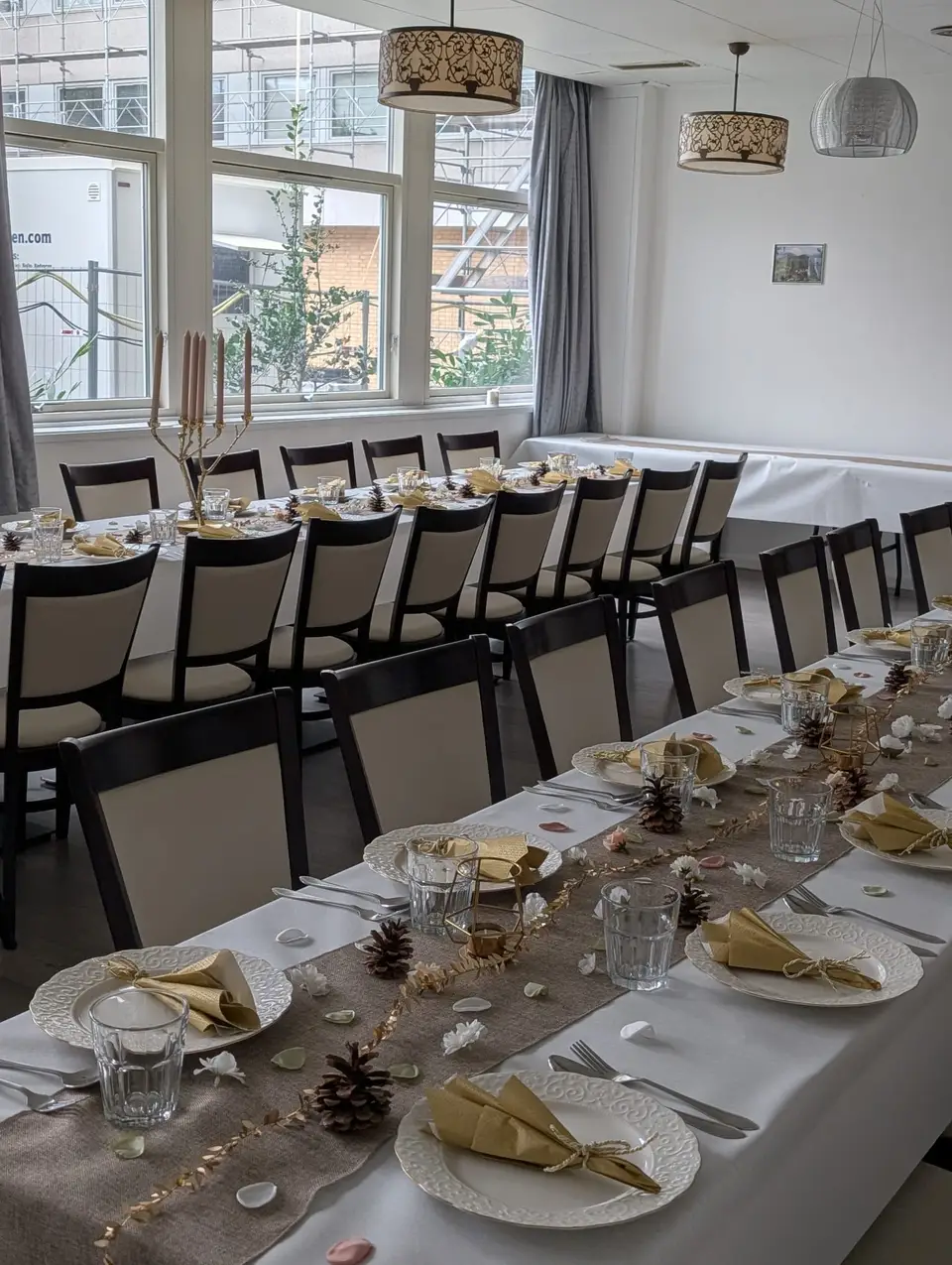
The word to start with is kur. It comes from the old business of paying one's respects at court, on a set day, in a room where the host stands and receives. The Danish royal house still keeps that version, greeting the government, the courts and the diplomatic corps in the first working days of January.
Everyone else borrowed the idea and kept the useful part. A nytårskur is a short reception held early in the year, where an organisation gathers the people it depends on, says out loud what the coming year looks like, and then lets the room talk. Companies hold one. So do trade bodies, housing associations, sports clubs, choirs and professional networks.
A reception, not a dinner
Almost everything that makes a nytårskur easy to host comes from one decision: nobody sits down for a meal.
There is no seating plan, no three course service and no speeches arriving between dessert and coffee. Guests stand, hold a glass, move between groups and leave when they need to. The invitation carries both a start time and an end time, which is unusual at a Danish party and is exactly what makes people say yes in a busy month.
That shape sets the length. Two hours is enough, and two hours is also what a guest who has been at work since morning can comfortably give you. If the room is still full at the end, the reception succeeded. Stretching it to four hours would only mean watching it empty.
It is not a second julefrokost
A julefrokost closes a year. It is long, it is seated, it is for the people on the payroll, and most of its warmth comes from looking back at the one that is ending.
A nytårskur opens a year, and the difference runs all the way through the guest list. Because it is short, sober in format and held in daylight hours, you can invite people you could never put at a julefrokost table: customers, suppliers, the board, the accountant, the members of an association, the volunteers who worked all autumn, the business next door. It is the one event in the Danish calendar where the whole circle around an organisation can plausibly be in the same room at once.
If your company already books a Christmas lunch in December, a January reception is not a repeat of it. It does a different job with a different list.
How to run the hour
Put the speech early, inside the first half hour, while the room is still arriving in a clump and nobody has committed to a conversation. A speech at the end of a standing reception interrupts the part guests actually came for.
Keep it to the two things people want: an honest word about the year that closed and a clear one about the year that opened. Thank whoever deserves it by role rather than by a long list of names. Then get out of the way.
A few practical things earn their place. Have someone near the door who greets people by name, because plenty of those arriving will never have met each other. Decide beforehand whether partners are invited and write it on the invitation. Ask for a rough reply by a date, and plan for a share of the list rather than all of it, since January diaries move.
What to serve when everyone is standing
One hand is holding a glass, so the food has to work with the other. That rules out anything needing a knife and anything that collapses off a fork.
The kitchen here works out of the same address as the hall, so a hot dish crosses a corridor rather than a city and arrives at the buffet still hot. Momo, the steamed Himalayan dumplings, are the right size for a small plate and come with achar on the side. Sekuwa, charcoal grilled marinated meat from Nepal's eastern hills, works off a skewer. Choila, a Newar dish, comes charred and then dressed cold, which is exactly why it keeps its character on a buffet that has to stand for two hours.
The question Danish guests ask first is whether it is spicy. Spice is not cooked through everything. It waits in the achar at the side of the plate, so a guest who wants none takes none and a guest who wants more helps themselves. Any menu can be made fully vegetarian, which matters more at a standing reception than at a dinner, because nobody wants to interrogate a buffet in front of forty colleagues. Our Nepali catering page sets out how the menus are built.
For drinks, there is an unlimited soft drinks package, or tap water, and a group may instead bring its own, billed as one fee that follows how many people are coming. A tray of kransekage at the end signals that the evening is closing without anyone having to announce it.
What to ask a room for in January
Ask for one room rather than two. A reception that splits across a landing and a side room splits the conversation too, and the speech only reaches half of it. Our hall seats 30 to 120 guests as a single space, so a group of sixty stays one group.
Ask what the room already includes before you price anything in. Here, decoration, sound system, projector, staff and cleaning are already inside the hall fee, so slides about the year ahead need no equipment rental and nobody from the office stays behind to tidy up. Hall booking starts at 30 guests, with menu and drinks charged for the people who actually come. The prices page sets out how the parts fit together.
Then ask about arrival. We are on Højdevej on Amager, in København S, with free parking on site, which is worth having in January when guests come straight from work in the dark. The hall sits almost exactly halfway between Copenhagen Airport and Copenhagen Central Station, so colleagues travelling in for the day can get here and away without planning an expedition.
January is the quietest month in most venue calendars, which means the date you want is usually still free. Read what a reception here involves, or come and look at the room before the invitations go out.