
What is gundruk, the sour green on the plate?
14 November 2026 · 5 min
The least impressive tray on a Nepali buffet is usually a small one holding something dark and tangled, with no sauce on it and nothing shiny about it. That is gundruk, and it is the dish guests stop and ask about more often than any other. The question is nearly always the same: what is this, and why is it sour?
What gundruk is, and how it turns sour
Gundruk is leafy greens that have been soured by fermentation. Mustard greens most often, along with radish tops and the big outer leaves of a cauliflower, which is to say the parts of a vegetable a Danish kitchen would usually put in the compost.
The method is old and plain. The leaves are left to wilt, packed down hard into a container so the air is pressed out of them, and then left somewhere warm to get on with it. The bacteria already living on the leaves turn the sugars in them into lactic acid. That acid is the sour taste, and it is also what makes the greens keep.
Once the souring has done its work, the greens are dried. That is why a bag of gundruk sits in a cupboard for months without complaint, and why it belongs to winter in the Nepali hills as much as it belongs to any one meal. The dried leaves are soaked and then cooked, and they hold a chew that fresh spinach has never managed in its life.
Why it is not sauerkraut, even though the comparison is tempting
Danish readers reach for sauerkraut straight away, and the comparison carries you about half the distance. Both are leaves turned sour by lactic fermentation rather than by vinegar. Then the two part company, over salt.
Sauerkraut is salted on purpose. Salt draws the water out of the cabbage, makes the brine the cabbage then lives in, and keeps the ferment running along a particular track. Gundruk uses none at all. The leaves ferment in the moisture they already hold, pressed under their own weight, with nothing added.
You notice the absence the moment you taste it. There is no preserved, briny background and no saltiness arriving from a jar. What is left is the sourness and the green, vegetal taste of the leaf itself, drier and sharper than anything lifted out of brine. It also hands the decision about salt to the cook at the stove rather than to the ferment, which is a bigger difference on a buffet than it sounds.
Is it hot, and what does it taste like
It is not hot. Sour first, savoury second, with a faint smoky, earthy note underneath that comes from the drying rather than from any spice.
Heat is the first thing Danish guests want to know about Nepali food, so it is worth being blunt. No chilli is cooked into gundruk. The chilli lives in achar, the pickle at the edge of the plate, and a guest who never touches that bowl eats a meal with no burn in it anywhere. The whole strength question is taken apart in how hot Nepali food really is.
The useful sentence for a cautious guest is this: gundruk is sour the way a good sourdough is sour, not the way vinegar is. Nobody has ever found it aggressive. Plenty of people find it addictive by the second helping.
The three ways you are likely to meet it
Gundruk is not one dish. It is an ingredient that turns up in a few settled forms, and all three can appear at a party.
- As a thin soup. Gundruk ko jhol is a sour, light broth, often with potato and sometimes with dried beans, ladled over rice or drunk from the bowl. In the hills this is the everyday version, and it is the one that explains why the greens were worth drying in the first place.
- Tossed cold. Sadeko means dressed or tossed, and gundruk sadeko puts the soaked greens together with mustard oil, onion, tomato and chilli. Sharp, chewy and taken in small spoonfuls rather than piled up.
- As the green beside the rice. On a full plate it sits with the dal, the rice and the vegetable curry and does a job none of them can do, which is to cut through everything else.
That third role is the one that matters most at a party, and it is why the tray is small. Gundruk is not there to fill anybody up. It is there so that the fourth mouthful tastes as interesting as the first.
What it does on a long buffet in the hall
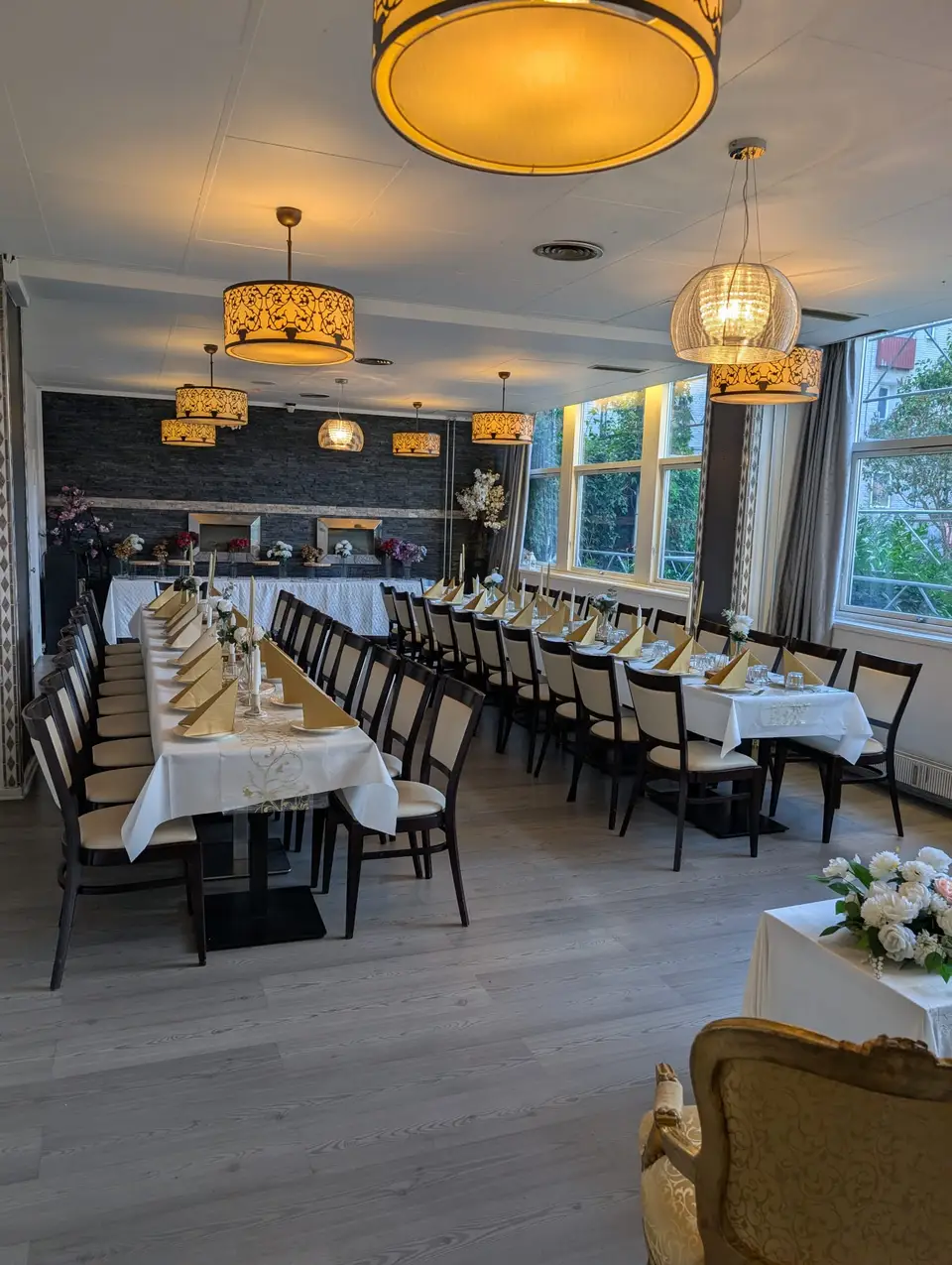
Our counter runs along the dark stone wall of the hall on Højdevej, with the tables set in front of it, and the trays on it are planned by the job each one does rather than by how much of it people will take. A sour dish earns its place on that line the way a good glass of water does halfway through a long dinner. It resets the plate.
It also has the quiet advantage of being a vegetable dish that nobody treats as a compromise. Any menu can be made fully vegetarian, and gundruk is one of the dishes that makes a vegetarian plate look like a decision rather than an omission.
The other reason it works here is the timing. Soaked greens that sit in a warm tray all evening go soft and give up their texture, so they are cooked in the kitchen in this building and carried out in batches across the service instead of being laid down once and left. The hall seats 30 to 120 guests, and a tray that comes out three times during the evening tastes the same to the last table as it did to the first.
If you are planning a party and want to know what would actually be on the counter, our catering page sets out how the menus are put together. Tell us the date and the headcount, come and see the room, and ask the kitchen what is in the small tray. You will get a straight answer from the people who cooked it.